Showing posts with label The Craft of Writing for Children. Show all posts

Monday, September 17, 2018

Critique Fear: How to Handle Negative Feedback

Have you ever received a critique on your work that pointed out substantial issues?
 
Yikes, it usually feels quite painful, particularly when it pertains to a story or poem that you really poured your heart and soul into.  You want to vanish into the floor like the Wicked Witch of the West does at the end of The Wizard of Oz.  If it happens in a writing class, you feel even worse.  Isn’t it embarrassing to have your work critiqued in front of other people?
 
Yes, it can be very painful.  But that’s the reality of being a writer.  You can’t get far without feedback.  Critical feedback can happen at any point in the writing process – from when you are coming up with an idea to when the book is finally out there.  Someone can critique and analyze your work in the most nasty way possible – and there isn’t too much you can do about it.  On the other hand, readers could provide invaluable advice which could help you transform your story into something great.
 
So, how do you handle critical feedback of your work? Obviously it’s painful, there are some things you can do to help minimize the pain and maximize the benefit of constructive criticism.
 
Listen to the feedback.  Does it sound like it contains and inkling of truth? If the feedback is rational, constructive, and detailed, it may just be helpful in the long run.  It’s painful to listen to it right now, but what matters is that you learn from it.
 
Consider the source.  Who is giving this feedback?  Is it a close friend?  A fellow writer?  Someone who cares about you and your work?  Most likely they are trying to help you improve your manuscript, even if the critique is unsolicited.  But if it is someone who may not have your best intent at heart, consider the source.  What has this person written and published?  Is it someone who’s written in the same book categories? (For example, someone who typically writes narrative nonfiction is unlikely to be an expert at writing fantasy).   It is very easy to critique someone’s work, and most people don’t realize how difficult it is to write until they hit the keyboard.
 
Consider the credibility of the critique.  Does the person offer vague comments?  Or something tangible that relates to your work? Once I was attending a class in which we were assigned to write poetry about a Halloween topic.  A writer wrote a very interesting poem about a ghost, to which one of the girls in the group said, “I don’t like ghosts. I don’t want to read about ghosts.” Naturally her comments centered around this idea and were not too useful.  This girl had a very distinct bias in her critique, and wasn’t able to read the poem with an open mind.
 
Step away from the critique for a while.  Write down the person’s thoughts, and look at them when you feel calm and collected.  It is important to be polite and respectful, no matter what someone says to you.  You may realize, down the road, that these comments are very helpful.  Or you may discover they are not.  But you probably want to step away and clear your mind before doing anything.
 
Don’t react emotionally. It’s natural to jump to the defense of our work, but sometimes the best approach is to listen quietly.  You don’t want to create a bad relationship with this person, or burn a bridge that can never be fixed.  Just be calm and professional about it.  The best approach is to thank the person for his comment, no matter how painful it is to listen to. Many times when someone makes a comment on your work, they are so focused on what doesn’t work that they don’t see how good the rest of it is. Don’t get discouraged, and don’t get down on yourself.
 
Look at the criticism when you are in a calm state of mind.  When you step away from your manuscript for a while, you can return with a fresh perspective.  You may begin to see that every word isn’t perfect, and that some of the comments that your readers have made are very helpful.
 
Use what is useful, and discard what doesn’t make sense.  Not everything that readers recommend will improve your manuscript.  And some of what they say has quite a bit of value.  Sometimes it is helpful if you receive their comments, write them down carefully, and use them as a later reference.  If everyone is making a suggestion to work on developing a less confusing plot, you may want to consider it.  But if just one person is making eccentric comments, consider the source and if it really is useful.  Remember, you don’t have to make these changes; you just have to think about it.
 
Take it with a grain of salt.  Sometimes people make very thoughtful comments, but other times people are happy to critique a work without thinking deeply.  It is important to read over the collected comments, and to try to find the threads that connect these thoughts.  You may discover certain themes keep coming up, and you may want to think about looking more carefully at parts of your manuscript.  In any case, it is important to realize that revision is part of the writing process.
 
Revise, revise, revise.  When you go away with constructive criticism on your mind, you can go a positive direction— toward overall improvement.  Or you can go in a negative direction, toward discouragement and despair.  You can persist toward excellence, or you can falter and fail.  You have to learn to take a few punches in order to be a good writer, and to be a great writer you need to be able to cull the good criticism from the bad.  In any case, you will quickly discover that a manuscript is never finished; to paraphrase Langston Hughes, it is merely abandoned.


Suzanna Henshon is a published author and longtime contributor to Children’s Book Insider


The post Critique Fear: How to Handle Negative Feedback appeared first on   WriteForKids - Writing Children's Books.

Sunday, June 10, 2018

Persistence Pays Off for Middle Grade Author Erin Teagan

by PJ McIlvaine


This is excerpted from an interview that appeared in the June 2018 issue of Children’s Book Insider. Click here to subscribe to Children’s Book Insider, or here to learn about the revolutionary WritingBlueprints step-by-step system to create, edit and publish books for children.


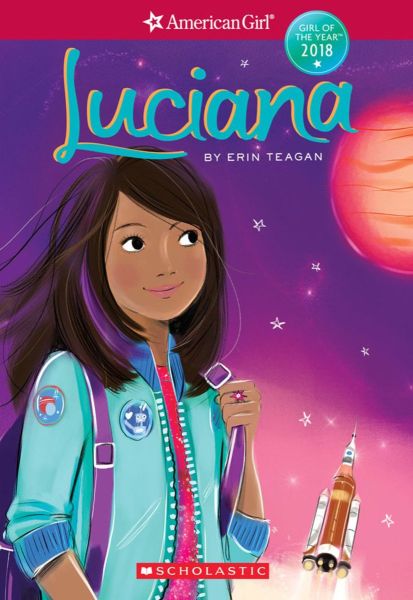
Erin Teagan (www.erinteagan.com) had it all planned out: she’d become a scientist first, then a writer. Combining her passions, Teagan’s debut middle grade novel, The Friendship Experiment (Houghton Mifflin Harcourt 2016) led to her being hired to pen the Luciana books for the American Girl: Girl of the Year 2018 series for Scholastic, Inc. Teagan lives in Pennsylvania with her two little self-described “mad scientists” and her extreme-sports obsessed husband.


PJ McIlvaine: With your first book, how long did it take from idea to first draft to actual publication?


Erin Teagan: The Friendship Experiment was my first ever NaNoWriMo project. That year, I spent most of October thinking about plot, working out challenges I might encounter while I fast-drafted. Going over characters and stories in my head. By the time November 1 rolled around, I was ready to get writing. I finished the first draft that month, but I revised for nearly two years before I found my agent. And then, my agent and I revised for another six months after that! The Friendship Experiment came out in November 2016, almost exactly five years from when I had the first glimmer of an idea.


PM: How easy, or difficult, was it for you to get an agent?


ET: Difficult. Finding an agent was a long road for me. I sent out my first submission to an agent in 2003, and I didn’t sign with an agent until 2013. During those ten years, I kept writing and producing new work and trying new things. I went to conferences and read books and joined a critique group. By the time I found an agent for The Friendship Experiment, I had seven full manuscripts in a drawer and about a million rejection letters.


PM: What do you like best about the writing process? Outlining? Research? Revising?


ET: Basically, I love every part of writing when it’s going well! I was never an outliner until I had to turn in outlines for Luciana, and by the third book, I started to really enjoy the outlining step in the process. It felt like brainstorming, and I loved that freedom. I think that’s why I like fast-drafting as well. When you’re outlining or working on a messy-first draft, anything goes, because you know the real work (revisions!) and the fine-tuning will come later.


For me, though, the worst part is that first time I read the messy-draft all the way through and have to face the reality of revisions. At first it feels paralyzing, like I can’t do it, like this will never grow into a polished manuscript, but as soon as I get my revision momentum going, things start looking up. That’s when I start enjoying the revision part of the process as well.


PM: The American Girl book series about “Luciana, 2018 Girl of the Year” — how did that come about? How many books are planned for the series?

ET: I feel so thankful for the opportunity of writing the Luciana books. It was an amazing experience, and a big surprise. American Girl was looking for an author that wrote for a middle grade audience and brought science into fiction. The Friendship Experiment had just come out and was on the SCBWI’s Winter Reading List, a list that any SCBWI member can volunteer their book for. The editor I worked with spotted my book on the list, read it, and thought my voice and background was a good match for the character and story they were creating. She reached out to my agent, and the rest is history!


PM: Your school presentations, as described on your website — how did you develop those? Do you tie the presentations in with your books/subject matter?


ET: I have a lot of fun developing the programs I offer. As a kid that didn’t connect with science until I was in middle school, I really looked forward to visiting schools and exposing students to a fun and/or weird part of science. All of my programs tie into my books. For example, in The Friendship Experiment, my main character likes to go around swabbing things (cleats in the lost-and-found, floors of the school bus, retainers…) to see what grows on petri dishes. I’ve visited a lot of schools and libraries and swabbed everything from tablets, door handles, trash cans and toilet seats to a favorite classroom book (Diary of a Wimpy Kid) with students. It’s fun and funny to see the results.


PM: Now that you’ve had several books published, do you find the process easier or harder?


ET: I’m not sure that publishing my books has made the process of writing easier, but each time I finish a manuscript, I’ve learned something that I can bring to the next project. And every time my writers group critiques something I’m working on, or an editor sends me notes, I learn even more. Because of this, sometimes I can read something I’ve written and figure out what’s not working. It can still take me two or five or ten revisions to fix it, but at least it’s a step in the right direction!

The post Persistence Pays Off for Middle Grade Author Erin Teagan appeared first on   WriteForKids - Writing Children's Books.

Wednesday, March 7, 2018

Author Brings Neurodiverse Characters to Middle Grade Fiction

This is an excerpt from an interview that appeared in the March 2018 issue of Children’s Book Insider.


by PJ McIlvaine


The path to publication is not always a straight road; sometimes there are twists and curves and unexpected potholes that throw you for a loop. Sally J. Pla (www.sallyjpla.com) took upheavals in stride, turning lemons into lemonade with two published books: the critically regarded The Someday Birds (Harper Collins 2017), and Stanley Probably Will Be Fine (Harper Collins 2018), which garnered a Kirkus starred review and was named a Junior Library Guild Selection of 2018. Her picture book, Ben­ny, The Bad Day, and Me, is coming out from Lee & Low in late 2018. Drawn to neurodiverse characters, Pla (pronounced “Blah” but with a P) has found her niche in the ever-expanding kid lit universe of #ownvoices.


PJ McIlvaine: Your novels both deal with characters in the “neurodiverse world.” What exactly does that term personally mean to you, and why are you drawn to write about those who feel left out or different or who have difficulty fitting in with expected social norms? How much of yourself do you see in your characters?


Sally Pla: I like to use Professor Nick Walker’s definition of “neurodiversity” which you can find on his blog Neurocosmopolitanism.com – it is, quite simply, a term referring to “the diversity of human brains and human minds.” But it implies that there is, or should be, a wide, diverse range of acceptance – that to advocate for neuro­diversity means that one accepts all of the great range of neurocognitive differences that make us human. And that those differences are valid.


There is another term: neurodivergence. This is used to describe those whose brains vary from the norm. Autistic, dyslexic, OCD, Tourette’s, etc. brains are described as neurodivergent.


And yes, I am drawn to neurodivergent kids. I have an autism diagnosis myself, although my symptoms are much milder now than they were when I was a child. I have an autistic son and nephew, and many friends. Every time I visit a school, I ask, “How many of you have a friend or relative or classmate with autism?” and every single hand always goes up. The rates are one in 68 now – higher in some spots. One in 41 eight-year-olds in New Jersey are autistic, according to the CDC. Autistic girls are especially under-diagnosed, I suspect. Autistic girls are missed because their symptoms are so different from boys’. They are more socially aware than the boys, generally speaking.


It’s my mission to populate kid lit with more authentically autistic and generally neurodivergent characters. It’s a bit of a personal goal. There are some good books out there, but not enough of them yet. We need more.


PJ: The cover for Stanley is awesome. It has the look of a graphic/comic book. How much input did you have in the illustrative process?


SP: Stanley is not a graphic novel, but it does have some cool interior art by Steve Wolfhard, not to mention his cover. Steve was a storybook artist on Cartoon Network’s Adventure Time. (When I tell kids that, I get a small cool vibe by association, so I like trying to yoke my name to Steve’s, hah.) My original vision was for this book to be a graphic novel, but along the way in the process, it morphed into something more wordy! I do want to try writing a graphic novel, and a web comic someday, and illustrating it myself. On the bucket list.


PJ: Your third published book will be a picture book. What inspired you to tackle that genre? Do you see yourself going back and forth between genres?


SP: I’d love to do more picture books. Benji, the Bad Day, and Me will pub with Lee & Low in late 2018, with great illustrations by Ken Min. It’s one of their first with an autistic character, and they are taking good care with it. I guess the point of writing for younger kids, for me, is to start early in portraying autism as a matter of course; as a totally normal, accepted thing. An annoying thing sometimes, yeah, sure, but still: part of NORMAL LIFE.


There are many, many picture books out there with autism in their title that point at a particular kid, usually a brother, and laundry list his symptoms, so other kids can “understand”. This is well-intentioned, but it is also, in a way, quite “othering” and pathologizing to kids who are trying desperately to find a place to fit in.


I wanted to write a picture book that unfolded naturally, with the autism just depicted as a normal part of family life. Annoying, sometimes, yeah, but still, normal. Because for kids who deal with it, whether themselves or in a sibling or friend, that’s how it really is.


PJ: From what I can tell, many writers are still confused about what #ownvoices means. I have seen some writers who are under the impression that because they have a disabled or diverse character (even if its a supporting or minor character) that the material qualifies to be categorized as #ownvoices. Can you elaborate on that?


SP: The definition of #ownvoices is that, for instance, you’re an author with Tourette’s writing a character with Tourette’s. You’re an autistic author writing an autistic character, a paraplegic author writing a paraplegic character. You actually have the same condition you’re writing about.


If you have a condition, but your book doesn’t mention it or deal with it in any way, then that’s not technically an #ownvoices book either. It’s really cool, but it doesn’t fit the standard agreed-upon definition.


I hope that clarifies!


For more from Sally J. Pla on writing diverse characters, see the full interview in the March 2018 Children’s Book Insider.


PJ McIlvaine is a published writer/produced screenwriter/kid lit author/blogger/jour­nalist. In a former life she was a great baker of Europe. PJ is a co-host #PBPitch, the premiere Twitter pitch party for picture book writers and illustrators.

The post Author Brings Neurodiverse Characters to Middle Grade Fiction appeared first on   WriteForKids - Writing Children's Books.

Tuesday, January 9, 2018

35 Years a Writer, 35 Lessons Learned

by Jane McBride


(Note:  This article is from the new January 2018 edition of Children’s Book Insider, the Children’s Writing Monthly.  To learn more about this essential tool for all kidlit writers, click here.)


Thirty-five years have passed since my first writing was published. Thirty-five years in the crazy business of writing have taught me a number of things. Thirty-five years have also taught me that I have much still to learn. But today we’ll start with what I’ve learned thus far. My hope is this list will shorten your own learning curve.


1. Writing is a business. Treat it as such.


2. Treat yourself as a business person. If you don’t respect yourself as both a writer and a business person, how can you expect others to treat you that way?


3. Keep records. Keep very, very good records. You never know when you’ll be audited, as my husband and I were five years ago.


4. Keep on top of your taxes. Do you need to make quarterly tax payments? Penalties are no fun.


5. Keep track of your expenses. Do you think that it’s too much trouble to record your mileage to a meeting or postage costs? Think again. Every penny counts.


6. Invest in yourself. If you can swing it, attend writers’ conferences. Subscribe to industry periodicals such as CBI, The Writer, Children’s Bookshelf (twice-weekly newsletter electronic newsletter from Publishers Weekly), etc.


7. Invest in good equipment. You wouldn’t try to cook professionally without the right tools. The same applies to writing.


8. Network. Even if you are an introvert, as many writers are, learn to network. You needn’t become a social butterfly at conferences, but don’t spend all of your time in your room. Engage others in conversation.


9. Have a support group. Writing is a solitary business. One of the best things you can do for yourself and for your career is to find a group of like-minded people. If you belong to a professional organization, see if there is a chapter in your area. If there isn’t, consider starting one. Or join an online group.


10. Find a mentor. A mentor can guide you in your writing, offer critiques, and tell you when you’ve gone off track.


11. Be a mentor. I’m a firm believer in giving back. Mentor a less experienced member of your writers group. Mentor a young writer at your local high school. You’ll learn much in teaching others.


12. Work to first learn and then improve your craft. Do you expect a surgeon to decide he wants to practice medicine and then start operating the next day? Of course not. You want a surgeon to have the necessary training and skills before he performs an operation. Then why do we expect to be skilled writers without learning how to write? Take classes. Attend workshops and conferences. Above all, practice your craft and write.


13. Don’t take the first offer that comes your way. In our eagerness to sell a book, especially a first book, it’s tempting to take the first offer, even a bad one.


14. Be wary of scams that pop up in the industry such as book doctors and others who claim they can fast-track your career. Some are legitimate; some are not. Always do your research before paying anyone to edit your manuscript or help you self-publish.


15. Remember that no agent is better than a bad agent. Don’t be in such a hurry to sign with an agent. Do your due diligence and check out any agent or agency before you sign.


16. Understand that a contract with an agent does not mean you are married to him or her, but that you will be “bound together” for the lifetime of any book he or she sells for you.


17. Don’t burn your bridges. Leave any agency or publishing house with good feelings on both sides. Any bad-mouthing about editors or agents on your part can and probably will come back to bite you.


18. Keep in touch. When an editor leaves your publishing house, it pays to stay in touch. The same goes for agents and other industry professionals.


19. Volunteer. Volunteer at your writers’ chapter, at conferences. Volunteer at bookfairs and the library. You will not only be giving back, you will also be making valuable contacts.


20. Establish working hours. When you’re writing, you’re working. Let your family and friends know that.


21. Don’t be afraid to say no. A few years ago, I received an offer to buy a book from a new publishing company. Something felt fishy about the offer, and I turned it down. In the end, I’m glad I did. The company proved not to be reputable.


22. Don’t be afraid to say no to family and friends. This goes back to treating yourself as a professional and expecting others to do the same. It’s tempting for others, when they learn that you work from home, to say, “Since you’re not working, will you ‘Let the repairman in,’ ‘Watch my sick child,’ Bake seven dozen cupcakes for the school bake sale,’ etc.” Smile politely and say, “I’m sorry, but I am working.”


23. Give yourself a break now and then. It’s wonderful to write every day (or whatever your schedule is), but it’s okay to take a break once in a while. You need to experience life to write about it.


24. Don’t beat yourself up when you can’t make your word count. Double down the next day. The important thing is that you keep writing.


25. Treat rejection as part of the learning curve. Rejections are a way of life for many writers, including me. After selling 36 books and hundreds of stories and articles, I still receive rejections with depressing frequency.


26. Respect your editor and/or agent. Don’t pester them with constant calls, texts, or emails. It’s okay to stay in contact, just don’t overwhelm them.


27. Meet your deadlines. Publishing houses operate on strict deadlines. If you don’t meet yours, you may put a crimp in the entire schedule.


28. If you can’t meet a deadline, let your editor know as soon as possible. Editors realize that emergencies happen. Give yours a heads-up if it becomes apparent that you can’t meet a deadline.


29. Be prepared to have financial dry spells. What happens if your last book doesn’t sell well? Can you still make the mortgage and buy groceries? (See # 30.)


30. Think twice before quitting your day job. Royalties can be delayed and/or be spotty. It helps to have the cushion of a regular paycheck to fall back on.


31. Know how many books you can reasonably expect to produce in a year. Set a realistic goal and then do your best to meet it.


32. Don’t be so quick to send off a book. Revise and polish, revise and polish again.


33. Stay current. Know what’s happening in your genre. Keep up with the latest trends. You don’t have to write to them, but you should know what is going on.


34. Find an outlet outside of writing. Writing is not just a business, but a form of expression as well. It helps to have another outlet to replenish your well of creativity.


35. Keep learning. A woman in my writing chapter expressed surprise when I mentioned that I had just returned from a writers’ conference. “With all the books you’ve published, I’m amazed that you that you still attend conferences,” she said. I replied, “I hope I never feel that I don’t need to learn something.”


Well, there you have it—35 lessons learned, many of them the hard way!


Jane McBride is the author of 36 novels, numerous short stories and articles including pieces in 16 Chicken Soup for the Soul anthologies . Follow her writing blog at http://ift.tt/2EqH3z5


Thursday, November 16, 2017

Writing for Children & Teens: Simple Steps to Understand Your Readers

by Jane Choate


In various writers’ groups over the years, I have heard a number of writers who say, usually with a certain degree of self-righteousness, “I don’t write for others.  I write for myself.”  That’s great.  For the rest of us, though, those who have struggled to get published and who are struggling to stay published, it doesn’t work.  We write for ourselves, yes, but we write for others as well.  We want our words to have an audience.  Just as a painter or a sculptor wants his works to be viewed and composers want their music to be heard, writers want their work to be read.  For it is in the reading that the work comes alive.


But anyone who writes for children and teens must ultimately answer a key question — just who is that audience?  Are we writing picture books?  In that case, the audience is the toddler and pre-school set; it is also the parents of those children as they are likely the ones to be reading the books to their children.  Are we writing for early readers?  For the ‘tween set?  For young adults?  Knowing your audience is key.  Knowing their tastes, their needs, their wants, their expectations is vital in penning the kind of stories that will touch their hearts and minds.


If you aren’t certain who your audience is, try one or more of the following steps:


STEP 1:  Know yourself.  If you don’t know yourself, how are you going to know your audience?  Know your comfort zone.  Know what makes you uncomfortable.  If you aren’t comfortable with angst-filled stories, you may want to steer clear of writing coming-of-age books.  Know your likes and dislikes.  Know your emotional and spiritual self.  If faith is important to you, you may find that you want to write for the growing Christian market. 


ACTION:  Ask yourself some questions.  Do you enjoy being around babies and toddlers and early grade-schoolers, but older children and teens send you running in the opposite direction?  If so, don’t be afraid to admit it.  Own that and embrace the fact that you are probably most comfortable writing for the preschool and early reader set.  Likewise, if you enjoy the humor and sometimes angst of older children, such as ‘tweens and young teenagers, you will want to focus your efforts there.  Or maybe you want to create stories for the YA market, to touch the lives of those teens who are on the cusp of adulthood.


STEP 2:  Familiarize yourself with what’s being written now for the age group for which you are aiming your work.  It’s wonderful to read the classics such as Laura Ingalls Wilder’s Little House series, Mark Twain’s Tom Sawyer, and Louisa May Alcott’s Little Women etc.,  but it’s imperative that you know what publishers are printing now


ACTION:  Read.  Read widely in your targeted age group.   Go to your library—a librarian can be a writer’s best friend—and ask for a recommended reading list.  If you have children or grandchildren in this age group, you have a leg up, as you are already familiar with what kids are reading.  Read books in other age groups as well.  You want to know the differences between a board book and a book penned for the almost-reader and to understand what sets a middle grade book apart from one written for the ‘tween age group.  Pay attention to vocabulary.  Books for very little children repeat words over and over.   For older children, the vocabulary is more varied.  Read pages aloud and listen to the rhythm.  This is particularly important in writing for small children who love repetition, not just of words but of sounds and sentence structure.


ACTION:  Subscribe to industry periodicals such as Children’s Book Insider.  Treat yourself to a current copy of Writer’s Market.  Learn what publishers are looking for in the varied children’s and teen markets.  Learn what agents are representing the kind of books you want to write and what their targeted audience is.


ACTION:  Go to places where you can find your audience and hang out with them.  For example, picture book writers can volunteer in a preschool or kindergarten.  Teachers LOVE volunteers.  Don’t be afraid to pick the brain of a teacher.  Teachers know what kids like to read and what they avoid like the plague.  If you’re writing stories for the middle-grade group, go to a third or fourth grade classroom.   If you belong to a church, offer to teach Sunday School.  If you don’t have children or grandchildren of your own, volunteer to tend the children of a busy young mother.  Not only will you learn more about children, you’ll be doing a tremendous service for a woman who works harder than any brick-layer! 


Young adult writers need to be online where teens are hanging out (teen book bloggers are a good place to start).  Watch current TV shows for different age groups, especially MG (middle grade) and YA.   Pay attention to the commercials that are sponsoring the shows.  You can learn a great deal from what products are being advertised and how they are marketed.  Go to movies.  Find out who the current super heroes are and who the heartthrobs are.


For picking up on teen language and behavior, there’s no better place than a mall where kids roam the stores in packs.  Settle in at a food court and listen.  Be prepared to take notes, but don’t spend all your time scribbling in a notebook.  Absorb the nuances of interaction between the teens.   Identify the leader and the followers and watch the “pecking order” in action.   Note what the kids are wearing.  Fashion is a spot-on commentator.  Each generation has its own style.  The ripped jeans and cold shoulder tops of today are the poodle skirt and twin set of the ‘50s   


STEP 3: Fit in.  No, I’m not suggesting you try to join a clique of middle-schoolers.  (As if they’d let you in!)   Once you’ve established your audience, learn what is appropriate for the different age groups.  You wouldn’t pen a gritty story of a child watching his parents’ marriage dissolve into a bitter divorce for a picture book, but you might write such a story for a ‘tween audience.  What is right for a YA novel won’t be right for a middle grade one.  Note:  I’m not saying that you can’t tackle tough subjects for younger children, only that your tone, vocabulary, and other aspects will be entirely different than they would be for an older audience.  


ACTION:  Read again.  Read this time with an eye and ear to the subtleties in language and style and tone and subject matter in books for various age groups.  At what age can you talk about sexual activity and LGBT issues?  What about cutting and other forms of self-mutilation and eating disorders?  When is it okay to use curse words?  Or is it ever okay? (This goes back to knowing yourself and what you’re comfortable with.  For myself, I couldn’t use offensive language in writing for children of any age.)


Learning to know your audience is like any other writing skill, such as crafting characters, strengthening conflict, and writing sparkling dialogue  You become better with practice.  The best way to do that is to write and to keep writing. 


The post Writing for Children & Teens: Simple Steps to Understand Your Readers appeared first on   WriteForKids - Writing Children's Books.

Tuesday, July 11, 2017

Writing Children’s Book Dialogue That Flows

On July 19th, renowned author and writing coach Teresa Funke will be hosting a live online workshop about crafting high-level dialogue for young readers.  We’ll have more details in the next few days.  Right now, to get the ball rolling, here’s a piece by Laura Backes that lays the groundwork for creating excellent dialogue.


Writing dialogue is something that should come naturally. After all, most of us spend at least a portion of each day in conversation with other people. But creating dialogue is more than simply transcribing actual speech. It’s even more complicated in children’s books, because the age of the reader must also be taken into consideration.


Written dialogue is a compressed form of real speech; it’s the meat of the conversation with all the fillers removed. Picture books and easy readers–books written for children ages eight and under–are told primarily through action, and the dialogue reflects this action. The characters’ speech in these books must give a sense of their personalities, but also clue the reader into what’s happening in the story. Just as plot has a forward direction, so must the dialogue.


In Arthur’s Loose Tooth, an easy reader by Lillian Hoban, Arthur’s dilemma is presented to the reader through a portion of a conversation with his sister:


“Guess what we are having for dessert,” said Violet. “It is your favorite treat! It is
taffy apples!” “Taffy apples!” said Arthur. “I can’t eat taffy apples with a loose tooth!
It might get stuck in the taffy!” “Well, if it gets stuck, you can pull it out,” said Violet.
“I don’t want to pull it out,” said Arthur.


Using simple, complete sentences necessary in an easy reader, the author has revealed the story’s action through natural-sounding dialogue. As stories get longer and more complicated, the back-and-forth chatter between characters can be less linear. In real life, each person bring his or her own viewpoint into the conversation and gets something different out of the exchange. Allowing the dialogue to bounce around naturally can add humor to the scene and go a long way toward character development. However, the author still needs to be mindful of giving the reader new information that supports the plot.


In this excerpt from Marvin Redpost: Alone in His Teacher’s House, a chapter book for ages 6-9 by Louis Sachar, Marvin is dog sitting for his third grade teacher:


“Let me see the key,” said Stuart. “Did you look in her closet?” asked Nick. “No,” said
Marvin. Why would he look in her closet? “How about her refrigerator?” asked Nick.
“Did you at least look in her refrigerator?” “Let me see the key,” Stuart said again.
“How about her bathroom?” asked Nick. “I don’t remember,” said Marvin. “You don’t
remember if you saw her bathroom?” asked Nick. “Let me see the key,” said Stuart.


Dialogue is a chance for the character to speak in his own voice. But real dialogue is not exclusively something that’s said out loud. The speaker is also carrying on an internal conversation at the same time. In middle grade and young adult novels, this inner dialogue of the main (viewpoint) character can also be shown to the reader. It’s the author’s perfect chance to allow the character to divulge deeper elements of her personality without stopping the forward movement of the plot.


Rachel Vail’s The Friendship Ring series offers terrific examples of seventh grade dialogue. In this excerpt from Zoe, the first book in the series, Zoe and a classmate are talking about best friends:


“Well,” CJ said slowly. “I was best friends with Gideon Weld when we were little, but
then, you know, we figured out he was a boy and I was a girl, so that ended that.”
“Right,” I said, like obviously you couldn’t be best friends with a boy. I’m just friends
with anybody. Nothing of my own. Why didn’t that ever bother me before? “And since
fourth grade, it’s been Morgan, although, sometimes, lately, I feel like she doesn’t
understand me,” CJ whispered. “But yeah, I guess it’s Morgan. Who’s yours?” “I don’t
know.” I faced away from her, toward the door, and folded my pillow over. “I don’t
have one.”


Strong written dialogue that’s convincing and interesting is so much more than the words that come out of characters’ mouths. How a character speaks–complete with pauses and sentence fragments–can show his emotional state. How a character moves while talking adds layers of meaning to the dialogue. The setting within which the conversation takes place can affect the discourse. Dialogue is intricately connected to every other element of writing, and only when it’s seamlessly woven into the fabric of the story does the book become whole.


The post Writing Children’s Book Dialogue That Flows appeared first on   WriteForKids - Writing Children's Books.

Tuesday, May 16, 2017

Watch Your Tone!

By Guest Author

by Jane McBride


Tone and voice are sometimes confused, the terms even interchanged. While voice is who we are, tone is an attitude toward our subjects and audience. There are as many kinds of tones as there are emotions: irony, sarcasm, flippancy, cuteness, sentimentality, and a host of others.


One way to distinguish between voice and tone is to remember that voice remains consistent, while tone varies according to subject and audience. Think of Shakespeare and his treatment of his plays. TAMING OF THE SHREW had a decidedly humorous bent while KING LEAR was written with a heavier hand. Both bore Shakespeare’s unmistakable voice, but he brought vastly different tones to the works depending upon what emotions he wanted to evoke.


A more current example is Judy Blume’s books. TALES OF A FOURTH GRADE NOTHING (one of my all time favorite children’s books) is written with humor and a light touch. Other works, such as ARE YOU THERE, GOD? IT’S ME, MARGARET, are treated with sensitivity, though her brand of humor still is very much apparent. Each of these works bears her empathetic and realistic voice, but they have very different tones.


Let’s take a look at some commonly employed tones and how authors used them, first to tell their reading audience what to expect and then to differentiate characters from each other:


Sentimentality. Before we discuss sentimentality, let’s review sentiment. Writing with sentiment is to write with deeply held feelings. Louisa May Alcott did this superbly in LITTLE WOMEN and her other works. Emotion colored each of her pages, not because she told us (the readers) what we should feel but because her beautifully painted words brought forth our laughter and our tears. Sentimentality is the opposite. It is the ostentatious show of cheap or shallow emotions, often portrayed by cliches and stock situations. What would an example of sentimentality be? The melodramas of the early 20th century come to mind. Such plays and movies were frequently filled with innocent, beleaguered heroines who were fighting off evil, mustache-twitching villains, only to be saved in the end by the stalwart, granite-jawed hero. The characters and the plot dripped with sentimentality. We were told what to feel and when to feel it.


Flippancy. Flippancy is defined as frivolously disrespectful, shallow, lacking in seriousness and characterized by levity. Flippancy has its place. It can make a point … up to a point. Too much and your reader is likely to be turned off. We typically associate flippancy with teenagers; however, younger children and adults can also use it to good effect.


Anger. We all know what anger is. Characters often get angry in stories, just as people do in real life. When anger turns to invective—unrestrained anger—it can get ugly. Save this tone for times of extreme emotion and violence. If all your characters are speaking in the same invective tone, the anger loses its punch. If you want to view some truly great examples of invective, tune in to political debates or speeches. Candidates are not shy about invoking invectives to score points off their opponents and to show their wrath for the media.


Irony. Irony, a figure of speech where the writer or speaker says the exact opposite of what is meant, can be a powerful tool. Jonathan Swift used it with exacting skill in his iconic work GULLIVER’S TRAVELS, using irony as a surgeon might a scalpel. Let’s pretend we are writing a book with a teenage girl as the protagonist. She is shy and retiring, but when she writes for the school newspaper under an assumed name, her wit comes out with ironic observations about the social hierarchy of the school’s social system. Her biting humor and keen commentary on the school’s cliques earn her alter a grudging respect among the students and teachers alike.


Preachiness. Preachiness happens when a writer or speaker is totally convinced of the rightness and moral superiority of his position. Such writing most probably will turn off your reader. Even the word causes us to cringe. Nineteenth century essays abounded in preachiness. Such writing won’t fly today. Is there a place for preachiness in today’s books? Maybe. What if you are writing a book about a young girl living in a polygamous community? Maybe there is an all-knowing preacher or father figure who leads the community and dictates every facet of the people’s lives, from their manner of dress to what the children study in school. He takes every opportunity to preach the “word of God,” laying down doctrine and unyielding rules in the same self-righteous voice. His preachiness has become a matter of contention between our young heroine and her mother, who believes his every word. In such a plot, having the leader speak in a preachy tone is entirely appropriate. Just be careful that you don’t make a caricature out of him. You want him to be believable.


Pomposity. Pomposity is the quality of being self-important, arrogant, or ostentatious. Have you ever read a book where a character starts to “pontificate” upon a subject? He probably sounds like a blowhard, spouting big words that come straight from a dictionary. Perhaps he throws in some scientific or technical words as well, words designed to make the listeners feel inferior to him. Like preachiness, this can work, if it fits the character and the situation. What story can we make up with a pompous character? What if you are writing a book for young children set in a barnyard? The animal characters each have their own personalities. The rooster, an arrogant bird who struts about with an air of ownership, addresses the other animals in a pompous tone that he believes is befitting of his superior position. The other animals are quick to put him down, maybe even using flippancy or irony. As with other tones, be careful with pomposity. If it is prolonged, it will probably start to become boring, frustrating, and/or annoying. Choose a pompous tone with care and sprinkle delicately.


Have you noticed that with each of these tones, I cautioned using them with a light hand? Overdoing any of them can turn your characters into cliché-ridden parodies. Unless this is your intent, be reserved in how you employ them.


You will probably identify other tones, in your own work and in that of others.


When I look at my own work, I see huge swings in tone, depending upon my audience and my purpose. A few years ago, I did a blog titled “Menopause Monocle.” The tone was ironic, sometimes sarcastic, and occasionally even biting. That was a far departure from an earlier blog, “The Gratitude Project,” where the tone was reflective. Each was stamped with my voice, but the tones were light years apart.


Pay attention when you are reading. Try to identify what tone the author is using and why he is using that particular one.


What about you? What tone are you employing in your current work-in-progress? Are you writing a mystery with darker overtones? Or are you working on a picture book that has a lilting rhythm and tone? Suit your tone to your audience and the subject.


Tone is but one more tool in a writer’s arsenal. Used wisely, it can flavor and enhance your writing.


Jane McBride is the author of 35 novels, numerous short stories and articles including pieces in 14 Chicken Soup for the Soul anthologies, and a Children’s Book Insider Contributing Editor. 

This is a post from writeforkids.org. Read the original post: Watch Your Tone!

Tuesday, March 28, 2017

Grand Slam Debut for Picture Book Author Nancy Churnin

By Guest Author

by PJ McIlvaine


This is an excerpt from an interview that appeared in the March 2017 issue of Children’s Book Insider.


From theater critic to debut picture book author may seem a bit of a stretch, but Nancy Churnin hit one out of the park with her biography of a celebrated athlete whose passion and persistence kept him going in the face of resistance and rejection. Churnin had that same determination to bring the William Hoy story to life. Hoy never gave up, and neither did Churnin.


PJ McIlvaine: You have quite the writing pedigree: a masters degree in journalism, currently a newspaper theater critic, and now a critically acclaimed picture book author for your debut nonfiction picture book The William Hoy Story: How a Deaf Baseball Player Changed the Game (Albert Whitman & Company, 2016). How did that journey evolve?


Nancy Churnin: I’ve always loved to write and have published poetry and short stories before turning full time to journalism, where I am grateful for the opportunity to write every day. One day, when I was sitting at my desk at The Dallas Morning News, I read about a high school in Garland that was doing a play called The Signal Season of Dummy Hoy. I read that it was about a man, named William Hoy, who was deaf and introduced signs to baseball so he could play the game he loved. I was fascinated! I wrote a story about the play and received a thank you note from a man in Ohio. I wrote back “You’re welcome, but why is someone in Ohio interested in a play in a high school in Garland, Texas?” Steve Sandy wrote back that he is a deaf man and it is his life’s dream to see William Hoy in the National Baseball Hall of Fame. We kept emailing back and forth and the more he taught me about Hoy, the more I realized he was right. William Hoy deserved to be in the National Baseball Hall of Fame, where he would be the first deaf man honored there.


PJ: Where did the inspiration for the Hoy story come from? Are you a baseball fan? With a growing emphasis on diverse books, how easy, or difficult, was it to find a home?


NC: I was trying to figure out how I could help Steve achieve his dream. I asked myself who are the most powerful people I know. And almost without thinking, I realized: children! I thought if I wrote a children’s book about Hoy, the children would see how deserving he was and they would help by writing letters and drawing pictures on William Hoy’s behalf to the Hall of Fame. Steve loved the idea! He is a friend of the Hoy family and he shared images of family photographs and letters and he educated me about the prejudice faced by deaf Americans, particularly in the 19th century when Hoy made such an amazing impact in the major leagues. Of course there was only one problem with my brilliant idea. I had never sold a children’s book. I knew it was a great story and I wrote it and I rewrote it and I rewrote it. But it was not until I realized I needed help and started joining writing groups and workshops that I started to get a handle on the craft.


I am a baseball fan, but I am even more a fan of folks with dreams who don’t give up and make the world a better place. I had many rejections for early versions of the story, but once I got it right, my amazing agent Karen Grencik of Red Fox Literary found William Hoy a good home with Wendy McClure of Albert Whitman & Company. Karen loved William Hoy right away and so did Wendy!


What’s fascinating for me, looking back, is that it stands up as a good newspaper article. It just took me a long time — 10 years! — to wrap my head around how different a successful picture book is from a good newspaper article! Also interesting is that I used the very incident I started the article with in the book, but at a different place in the story, in a different context, as part of the build-up to William’s frustration, and the inspiration for his big idea that changed the game.


“Imagine you are standing at home plate, your bat poised, waiting

for the very first pitch of your very first major league game.


Are you excited? Sure! But imagine that instead of the cheers of

the crowd, you hear … silence. Because you’re deaf.


That first ball whizzes by. You think it was a ball. But was it a

strike? The umpire makes no gestures to clue you in. You can’t hear

the call, so you try to read his lips.


And while you’re trying to read his lips, the pitcher throws the

next ball before you’re ready. On purpose.


Then, after a few more pitches, you’re left standing at the plate,

not being told you’ve struck out, so everyone can laugh at you,

while you’re slowly figuring it out.


That’s what happened to William Ellsworth Hoy, one of the first

deaf and mute players in major league baseball. “

(Dallas Morning News, February 5, 2003, by Nancy Churnin).


PJ: When you decided to write the William Hoy story, did you have to get the approval and/or rights from the Hoy family?


NC: Steve Sandy was the official spokesperson for the Hoy family. The Hoy family gave him access to family photos and letters that he shared with me. The Hoy family has been delighted with the book, which has been a special joy to me. William’s great grandsons Adam and Cain Hoy are Facebook friends of mine and I have treasured kind words I have heard from various members of the Hoy family.


PJ: From writing the first draft to eventual publisher acceptance, how long did that take?


NC: I am so embarrassed to admit how long it took from first draft to publisher acceptance. I first wrote The Signal Season of Dummy Hoy in 2003!!! I had so much hubris when I began. I figured that since I am already a professional writer — a journalist — how hard could it be to write a picture book? So many many drafts, so many many submissions, so many many rejections before I realized I needed help. I actively sought it out in 2013 by signing up for 12 X 12 and Mira Reisberg’s class, and Susannah Hill’s class and PiBoIdMo challenge and Children’s Book Insider and Rate Your Story and Kristen Fulton’s Non-Fiction Archaeology and SCBWI and a Dallas SCBWI conference and critique groups galore and RhyPoIdMo and any group I could find that would have me. Once I started listening and studying and absorbing and practicing the craft, things moved along. Seven months after I signed up for 12 X 12 in July 2013 I signed with my agent Karen Grencik and she sold The William Hoy Story in the fall of 2014. Then, everything was quiet until we started the editing process in spring of 2015. The book came out in March 2016 and in this very same year, Karen sold three more books for me.


PJ: Do you have any tips or advice for staying inspired and passionate while writing? How do you keep going in the face of rejection and disappointment?


NC: What keeps me passionate is remembering WHY I’m writing. I believe we are here in this world to make a positive difference in the lives of others. Every time I share The William Hoy Story with kids and see eyes light up, every time I feel a wall coming down between kids who are hearing and deaf, every time a parent or teacher tells me that this is a child’s favorite book because that child has a challenge or feels different, William’s story inspires them to believe that their challenge or difference may be their gift too, that is everything.


PJ McIlvaine is a published writer/produced screenwriter/kid lit author/blogger/journalist. In a former life she was a great baker of Europe. PJ’s websites are http://ift.tt/2osgWzM and http://ift.tt/2o03G8Q. She is represented by Jen Corkill Hunt of The Booker Albert Literary Agency.

This is a post from writeforkids.org. Read the original post: Grand Slam Debut for Picture Book Author Nancy Churnin

Monday, January 30, 2017

Visiting Book Fairs and Conference Exhibit Halls —Why, Where, and How?

By Guest Author

by Lionel Bender


As a regular visitor to many major conference exhibit halls, book fairs, and publisher exhibits over some 28 years, I firmly believe that these events provide unique and unequaled opportunities for children’s book authors and illustrators to learn about their industry, the marketplace, and to network with publishers, freelancers, and others on whom they depend for successful careers. However, I am aware that many authors, editors, and illustrators don’t realize they can attend these events; believe that, if they have an agent, they don’t need to attend; are dissuaded from going; or believe the investment of time and money is not worthwhile.


In the States, there are national and regional book fairs and exhibitions held throughout the year organized by the American Library Association (ALA), National Science Teachers Association (NSTA), National Council for Social Studies (NCSS), National Council for Teachers of English (NCTA), American Association of School Librarians (AASL), International Literacy Association (ILA), education boards, and others. There is also Book Expo. Internationally, there are major book fairs in Bologna, London, Frankfurt, and Beijing. Attending the major book fairs may be costly for travel and accommodation, but local or regional fairs are easily accessed and affordable—entrance fees for the exhibit halls are usually less than $50. [Some publishers and publishing people do attend book festivals, but few if any of the following opportunities arise at such events.]


At book fairs and in conference exhibit halls you can achieve all or some of the following:


1. see what publishers have produced and, in many cases, are about to publish;


2. discover the most likely publishers for your work;


3. identify the editors or art editors you need to approach and get their contact details;


4. determine publishers’ procedures for submissions or applications;


5. collect publishers’ catalogs and sample books or have them sent to you or your school;


6. identify non-traditional outlets for your work;


7. attend author signing sessions and get an insight into book marketing and social networking;


8. sense new trends and get ideas for new projects by reviewing what others are doing;


9. see some digital developments on display and test them out;


10. attend workshops, presentations, and panels given by industry leaders;


11. network with other authors, illustrators, and freelancers and share information and experiences.


Do bear in mind that you can’t just turn up and expect success. You need to prepare in advance; have a plan of action on the day; and follow up after each fair. Also, you need to respect and acknowledge the business of fairs, and be friendly, polite … but a little pushy and firm! If you decide to visit a book fair, do find out about the format and focus of the fair before you go, and do seek as much advice as you can about how to try and achieve the maximum benefits. I find each and every book fair rewarding and, in one way or another, well worth the time, effort, and expense.


For details of key conference exhibitions and book fairs see the following websites:

http://ift.tt/ldWAbr

http://ift.tt/2jPBWPe

http://ift.tt/JwzE4C

http://www.ala.org

http://www.nsta.org

http://ift.tt/2jPu1Bd

http://www.ncte.org

http://ift.tt/JwzE4C


Lionel Bender is an author, editor, and director of book packager Bender Richardson White (see: www.brw.co.uk), which produces children’s illustrated nonfiction. His company offers an in-depth guide on maximizing opportunities at book fairs and conference exhibit halls. For details to purchase this contact Lionel at lionel@brw.co.uk

This is a post from writeforkids.org. Read the original post: Visiting Book Fairs and Conference Exhibit Halls —Why, Where, and How?

Friday, November 25, 2016

Create a World with Your Five Senses

By Laura Backes

by Suzanna E. Henshon, Ph.D


How do you start a story? Does the vision of a character enter your mind, or do you start with a plot? While it is critical to begin with compelling characters and logical plot lines, many writers forget that there are other things involved in developing a story. In essence, the job of the writer is to take the reader into your world, to give her a sense of what encompasses the place your characters inhabit.


As you begin writing, it can be helpful to close your eyes and to imagine your character’s world. What do you experience when you think about it in a visual sense? When you feel it in a tangible way? When we think of some of the greatest works of fiction, these authors make their worlds come alive in compelling ways — to the point that someone can draw a map of the world and fill it in with details. That’s what you want to do with your writing.


An effective way to draw readers into this fictional world is to use your senses as a guide. Here are some things to think about as you create a world upon the page.


Sound


What sounds fill your character’s world? How do these sounds influence her life experiences, and the way she negotiates her world? As you listen to the sounds that fill her world, you may find these sounds can also enhance your fictional work.


Sight


What does your character see? Many of us forget that children have a different perspective on the landscape. Without the benefit of life experiences and size, they walk through a landscape that is closer to their feet. For example, a three-year-old standing in a crowd can’t see what an adult can. Her perspective is going to be seeing the backs and legs of people, not the actual speaker in a crowd.


Touch


What does your character touch? When she gets out of bed in the morning, does she hold a stuffed rabbit? When she heads to breakfast, does she eat cereal that is smooth in texture, or does she consume a piece of bread? These experiences are an important part of your character’s life, and you want to share them with your reader.


Smell


What does your reader smell? When we think back to childhood, some memories remain vivid — the smell of a chocolate chip cookie baking in the oven resonates with cocoa and sweetness, no matter how many years have passed. When we step into a school cafeteria, we are overwhelmed by the smell of meals eaten and consumed recently. When you think about what your character smells, you will start to see that every experience she has can enhance the authenticity of the narrative.


Taste


What does your character like to eat? Sometimes it can be very helpful to eat the things your character loves. It’s difficult to imagine Roald Dahl writing Charlie and the Chocolate Factory without a candy bar in his hand. So eat what your main character does — and share this meal with readers.


Now that you have become accustomed to writing with the five senses, you can see that when you think outside the traditional way of telling a story, you can include many more details that enhance your reader’s experience. You can include many more details that guide a reader into your world, into the world of a child who exists on the page of your story. When you think through the senses and how they impact our life experiences, you become a stronger and more effective writer.


Dr. Suzanna E. Henshon teaches full-time at Florida Gulf Coast University and is the author of several young adult and middle grade books, and two collections of writing exercises. Her newest book, Andy Lightfoot and the Time Warp, is available for the Kindle on Amazon.

This is a post from writeforkids.org. Read the original post: Create a World with Your Five Senses

Tuesday, October 11, 2016

A Fantastic Example of ‘Show, Don’t Tell’

By Jon Bard

The advice “show, don’t tell” is certainly one of the most overused pieces of writing instruction.  But it’s overused for a very good reason:  It’s a core principle of great storytelling.


When a character’s simple action reveals more about him than five paragraphs of expository prose, you’ve rewarded your reader with something wonderful.


I’ve been enjoying the new HBO series Westworld.  It’s well written, beautifully acted and very intriguing.  In this week’s episode, the writers pull off a masterful bit of “show, don’t tell” that I wanted to point out, in hopes it will spark some ideas for your own writing.


Westworld takes place in a theme park in which human visitors get to relive the old west, thanks to hundreds of human-like robots.  In this week’s episode, we’re introduced to two human visitors as they arrive at the park:  William and Logan.


We get the idea pretty early that Logan is cocky, arrogant and most likely looking for trouble.  But we aren’t so sure about William.  He’s quiet and perhaps a bit intimidated by the experience.  But how he’ll act once ensconced in Westworld is a mystery.


Until the writers pull of a spectacular “show, don’t tell” moment.


We follow William as he selects his wardrobe for his adventure.  Some boots, some rawhide trousers, a jacket.  And then he comes to his final selection.


On one wall, a rack of black hats.  On the other, a rack of white hats.


The camera closes in on William’s face as he ponders his decision.


The next shot is of William and Logan striding down Westworld’s dusty main street.  Logan is wearing a black hat, William is wearing his newly chosen white hat.


And with that, we’ve learned volumes about these men and their intentions.  One is there to be an outlaw, the other a hero.


And not a word of dialogue was needed.  That’s showing, not telling.


(Image:  HBO)

This is a post from writeforkids.org. Read the original post: A Fantastic Example of ‘Show, Don’t Tell’

Tuesday, June 7, 2016

Get Started Writing for Kidlit Magazines

By Guest Author

What’s old is new again. The saying is never truer than when it comes to writing for children’s magazines. Did you think that magazines for children and teens had gone the way of the dinosaur with the proliferation of tablets and other electronic devices which children and teens have so enthusiastically embraced?


Nothing could be further from the truth. In fact, the use of tablets, smart phones, and other such devices have spawned online magazines in addition to print ones. Digital editions may have additional content since the publishers do not have to pay more for print costs. This is a plus for writers as it means that editors need more pieces than ever.


Themed Magazines and Theme Lists


A themed magazine focuses on a particular subject in every issue (such as American history after WW II). This is different from a more general-interest periodical that has a monthly theme for feature pieces (a nature magazine with a January theme of hibernating animals). You can learn about these themes and theme lists on the magazine’s web site. Familiarize yourself with them. Submitting a query or a story that has nothing to do with the theme is one of the fastest ways to mark yourself an amateur. Worse, an editor may think that you don’t care enough to find out what he/she is looking for. (Note: Theme lists have submission deadlines for each issue, often 6-18 months before publication date.)


Denominational Magazines


These are usually magazines with relatively small circulation and targeted toward specific religions or denominations. They frequently do not pay a great deal. However, one of the perks of writing for the denominational market is that you may be able to re-sell your story or article over and over as the readership of these magazines generally do not overlap. Of course, you’ll let the editor know if you’re sending in a piece that has already been published in another magazine.


Queries Required


Querying a magazine is much the same as sending in a book query. Study the magazine first. Understand what its audience is. Make your query shine. It doesn’t hurt to have a writer friend look it over. Don’t turn off an editor before you get out of the gate by turning in a sloppy query filled with misspellings, poor grammar, and inaccuracies. And, for heaven’s sake, make sure you spell the editor’s name right. Set your query up as a business letter, with your name and contact information, the date, a salutation, and the query itself.


Nonfiction pieces usually require that the author query before submitting. Some magazines also ask that you add a bibliography of your research sources to your query letter. You can up your chances of having your query hit its target by studying the magazine in advance. Know the underlying premise and purpose of the magazine. Is it a science-based publication? Is it related to a specific organization, i.e. Boy Scouts of America, which sponsors Boy’s Life? Sending a query about how to be more popular in school isn’t likely to be accepted by a magazine that focuses on health.


What can you do to increase your chances of having your query accepted? Include in it the slant you will take on a topic that will be both child-friendly and unusual enough that it doesn’t sound like everything else the magazine publishes. Editors are fond of saying that they want “the same but different.” Include the word count of the finished piece. Don’t plan on sending in a 1500 word piece when the writers’ guidelines clearly state the word limit is 900. That wastes everyone’s time.


More and more magazines are requiring a query for fictional pieces as well as nonfiction. Ignore this step at your peril. I had written for a particular children’s magazine for several decades, sending in stories without ever sending in a query. I was fortunate enough to sell well over half of my submissions. (I don’t know about you, but for me this is a great percentage of sales.) Several years ago, the magazine’s editorial board made a decision that authors needed to query the magazine before submitting a story. Though I resisted the idea at first—after all, I’d sold hundreds of stories without ever sending in a query—I began to see the wisdom of the change in policy. Queries are quick and easy to read, allowing editors to immediately make a decision on whether or not to give the go-ahead. What first seemed a drawback became a plus as my acceptance rate climbed to nearly 90%. It pays (in dollars and cents) to follow the guidelines.


The Submission Itself


Some writers for children’s magazines believe that they shouldn’t send in their “best stuff” because they want to save it for a book. This is foolish in the extreme. Every submission, whether article, story, or book, should be your “best stuff.” If you think an idea is mediocre, chances are the editor will as well.


Ask yourself these questions before submitting:


✏ Does my piece (fiction or nonfiction) fit the parameters of the magazine? For example, you won’t want to send a piece about birth control for teens to a magazine that promotes adherence to strict religious values. Nor will you want to send an article about religions around the world to a magazine that is purely secular in scope and content.


✏ Does my piece fit within the word count? If not, shorten it. If your story is directed to very young children, the word count may be even less than the standard word count. One magazine I write for wants their stories to come in at around 600 words, but stories for the preschool set are only 250 words.


✏ Does my piece fit within the magazine’s general theme or an upcoming theme on the theme list?


✏ Does my writing fit the tone of the magazine (conversational, literary, informational, etc.)?


✏ Is it free from misspellings, grammar mistakes, and other “oops?”


✏ Have I read several back issues of the magazine, and scanned the table of contents of at least a year’s worth of issues to be sure I’m not repeating an idea that was recently published? (You can find back issues of many magazines at the library.)


Final Words


Where should you look for magazines accepting articles and stories for children’s magazines? CBI is a great place. Look at other guides for writers as well, such as Children’s Writer’s & Illustrator’s Market, an annual guide published by Writer’s Digest which has an entire section devoted to children’s and teen magazines. You can also simply type in “magazines for children” into your search engine and then look for submission guidelines on each publication’s website. Many also offer sample issues online for you to study.


Why should you write for children’s magazines? Your goal is to write and sell books. That’s great. But don’t dismiss this market. Selling a story to a children’s periodical gives you that all important credit on your writing resume. Writing short stories and articles hones your writing skills


This is a post from writeforkids.org. Read the original post: Get Started Writing for Kidlit Magazines

Monday, April 25, 2016

The Adventures of Dan Santat: A Conversation with the Caldecott-winning Author & Illustrator

By Guest Author

by PJ McIlvaine
 
 
SHAZAM! It’s a plane! A train! A speeding bullet!

 
No! It’s SUPER DAN — as in the prolific (a mind-boggling 40-plus books, with 5 books coming out in 2016) author/illustrator Dan Santat.


Super Dan does it all in kid lit, and in 2015 he added a 2015 Caldecott Medal to his prestigious resume for The Adventures of Beekle: An Unimaginary Friend, soon to be an animation feature film from DreamWorks. However, Dan would be the first to tell you that it wasn’t always so. His father wanted him to be a doctor, he almost gave up on his dreams for a steady paycheck at Google, and Little, Brown initially passed on Beekle. Dan is the real deal: candid, humble and down to earth. And he looks pretty good in a cape and tights.


PJ McIlvaine: How did majoring in microbiology become a springboard to becoming a 2015 Caldecott winner? Did you write and draw as a child? Did your family encourage your creativity?


Dan Santat: Depriving me of the opportunity to draw was what fueled me. My parents wanted me to become a doctor, but drawing was what I loved to do most in life. I was an only child and so I would spend hours copying pictures of comics that I liked. I remember I used to get mad at myself if I couldn’t get a drawing exactly right. I would write stories but they would start out with a basic greeting and then mostly evolved into pages of action scenes. My mom encouraged me most. She liked to help me win ribbons at the county fair every year, though my dad was worried that it would detract from me someday becoming a doctor.


PJ: How do your parents feel about your career choice now?


DS: They’re happy and proud of me, but I don’t think they truly fully understand what I’ve achieved. They understand that it’s significant, but I don’t think? they could?exactly explain to their friends in full detail what it means.


PJ: I understand you once turned down a job at Google to pursue your ambitions. Was that somewhat of a leap of faith?

 
DS: Absolutely. I had always felt the need to earn a steady paycheck because I was the type of person that always felt as if my career could go into the tank in an instant. The job offer came about a year after I had left a full time job at a video game company, I had my own cartoon show at Disney (The Replacements) and I was working at home after hours illustrating books and magazine editorials. I was doing fine, but I was constantly worrying about the negative. Google was a type of job that would have secured me financially, but I also realized that I would probably regret life if I didn’t get to see how far I could take my freelance career if I just focused on it solely and gave it a 110% effort. When I turned them down I kept the job offer (which I still have) and I remember telling myself, “Don’t ever let yourself regret this decision.”


PJ: How do you pick your projects or do they choose you?


DS: I get a good offering of projects but I choose the ones with an emotional hook or something that speaks to a reader on a deeper level. I try not to pigeonhole myself into taking the same projects over and over. Prior to Beekle, I don’t think I would even have gotten then chance to work on a deeper emotional type of project. For many years I was just getting funny manuscripts and cute animal stories. I had to show that I was capable of being more than that.


PJ: How do you decide which projects to collaborate on? Now that you’re on top of the heap, so to speak, do you have your choice of projects?


DS: Collaborations are usually presented to me with the author already prepared to present his/her material to a publisher. I don’t seek them or work with others actively to present a project. I wouldn’t exactly say I have my choice of projects either, but I do think my name is thrown into the mix more often. Even prior to winning the Caldecott Medal I was already working with well-known authors whom I admired and they were often opportunities that I knew I would be silly to pass up. Folks like Jon Scieszka, Dave Pilkey, Michael Buckley, Mac Barnett, etc.


PJ: How has winning the Caldecott for Beekle changed your life? What keeps you grounded? What does your son think of Beekle (he was the inspiration, correct)?


DS: I no longer feel like a “has-been” or a “never-will-be”. I always felt like my books were invisible to folks. This is the first time in my life where I have felt like folks are asking what I’ve got next up my sleeve. I’m grounded by the fact that I don’t ever want to settle on the success. I don’t want to look at Beekle as the peak of my career just yet. I want to feel that my books can be even better than that in the future. Then you’ll see a hot new artist with a great new style or a writer who can really string a great sentence together and you realize you still have a ton too learn. My son loves the book and the story behind the origin of it (a metaphor of his birth) but I think he’ll appreciate it much more when he’s an adult possibly reading the book to his own kids.


PJ: How did the sale of Beekle to DreamWorks come about? Was that on your dream list? How involved—-or not—will you be with the movie?


DS: Funny story is that Little, Brown actually passed on Beekle when I presented it to them. It was too rough for them to fully comprehend. DreamWorks met with me a few months later because they were fans of my earlier work and wanted to see what I was working on. I showed them sketches and told them what the story was about, and I think being face to face with someone just really made it clear as to what I had intended. Once Little, Brown learned that DreamWorks had optioned it they reworked it into my two-book deal that I had signed with them and also made it my first title. I never actively seek to have a book be made into a movie. I think doing so is insincere to the content. I make a book for kids to read, not to be a means to an end in hopes that it becomes something else. I’ve already had experience with my own cartoon show (The Replacements) and I wasn’t particularly fond of the process.


There are a lot of emotional highs and lows that come with putting a show together and I’m not really big on adding more stress to my life. I just try to make the best work I can possibly do. Right now, Jason Reitman is writing and directing this feature for DreamWorks and I couldn’t think of a better person to do the job. I’ve been a huge fan of his for years and he’s approaching the material from a place that’s personal to him, as well, so I know it’s in safe hands. I don’t want any involvement in the project. I think doing so will just muddle the process and I think I’ve already said all I’ve wanted to say with my book. Jason probably won’t make it exactly like my book and I don’t expect him to. If anything, I’m interested to see another artist’s interpretation of my work. That’s what making art is all about sometimes.


PJ: You’re comfortable in picture books, graphic novels, and TV animation—is there one genre you prefer over the others?


DS: I honestly think I’m best suited to making graphic novels. My voice lends itself better to a slightly older audience of kids. You also have more room to build emotion and a sense of pacing. The only problem is that they take years to produce, though I’m trying to change all that by creating more time in my schedule for my own works. Picture books are the hardest things to make. It’s about making a story as efficiently and economically as possible. They’re very easy to screw up and I don’t think people fully realize how delicate the balance is from making a good book, to a great book, to an awful book. It could just be a matter of changing a few words that can completely change the meaning or emotional arc of a story. TV is a completely different beast. In television you’re trying to please as many people as you can in order to get the most viewers and the content can become very homogenized.


PJ: How easy—or hard—is it to balance your work life and family life?


DS: You have your ups and downs. For me, I realized that I’ve been very intense with my career but I’m also the type of person who never wants personal life to suffer because of it, so I would often just work longer hours to offset the time I made for family. I always wanted to have my cake and eat it too but I never wanted anyone to feel deprived of their needs from me so I took the burden upon myself to try to please everyone by working harder both as an artist and as a parent (If that makes any sense). Now, I think my body took a toll from all the hard work I’ve done for the last ten years. I’ve been making efforts to find a new balance that I’m comfortable with, which has been hard for me. If I do too much then I get tired and stressed out. If I do too little then my mind gets anxious and I get depressed.


PJ: What comes first for you, in terms of inspiration, the prose or the illustrations?


DS: For me the concept is leaps and bounds the most important aspect out of the entire process. If you have a good idea then everything falls into place much easier, but coming up with a good idea can take years. It’s easily 80% of my entire book making process without having to draw a single image or write a single word. Now, to answer your question, my illustrations are good at setting a mood, but I feel my prose is good at delivering the emotion. One relies heavily on the other, but had it not been for my ability to illustrate I wouldn’t be where I am today.


PJ: Do you draw by hand or on a computer?


DS: I draw by hand on the computer if that makes sense. I paint textures traditionally with watercolors and pen and ink and then I scan them into the computer. Then I use the textures to incorporate them into my digital work. I have a whole hard drive filled with textures, which I’ve accumulated over many years. It’s been a long learning process.


PJ: Do you use a special drawing application on your computer? What kind of computer do you use?


DS: I use a five-year old iMac with Adobe Photoshop, and a Wacom drawing tablet.


PJ: How many drafts of a book/artwork do you do? Do you write/draw every day? Any rituals? How long does you it take you to complete a book?


DS: It depends on each project. Beekle was maybe over 10 drafts, but my newest book, Are We There Yet was only about two drafts. Some things just click into place and I’ll have it fully formed in my head in advance. I’ll work on something every day. Even if I don’t actually draw or write I’m thinking of something. As a ritual I’ll go for a jog and have a cup of coffee to really wake myself up. I listen to podcasts or audiobooks while I’m jogging to inspire me. I’m constantly juggling projects, sometimes five or more at once. I’ve worked on my graphic novel, Sidekicks, which took about five years and I’ve illustrated a picture book, Because I’m Your Dad, in 30 days.


PJ: From acceptance? to publication on your first book—how long did it take? Any wisdom or tips you wish you had known?


DS: Two years, for me. Signed the contract, wrote and illustrated the book in about a year, and then it was a year of marketing by the publisher. Can’t really complain about the experience. I met my editor, Arthur Levine, at an SCBWI conference and he gave me a two-book deal on the spot, which kind of falls into the category of “Cinderella Story”.


PJ: You’re represented by Jodi Reamer of Writer’s House. How difficult—or easy—was it to secure representation?


DS: It’s tough when you never submit your work to an agency because you don’t think you’re good enough to be represented by them. I met Jodi through a friend who was repped by her and Jodi became familiar with my work because she is a Disney nut (she saw The Replacements). After leaving my old agent, my friend asked Jodi for me when I was looking and Jodi reached out to me by email. Jodi and I have been extremely close friends ever since.


PJ: If there were one thing about the writing/drawing process you could change, what would it be? Is there one you prefer over the other?


DS: I wish picture books could be longer than 40 pages without the publisher stressing out about it. I always feel like I could use an extra spread or two in every book I do to nail the pacing. I prefer drawing. I feel I’m a stronger illustrator than a writer, but I’ve improved on my writing tremendously in the last five years.


PJ: Do you multitask? If so, how many projects do you work on at one time? You’re so prolific, how do you keep your energy going?


DS: My entire life is a multitask. I would say I burned out three years ago but was too busy to realize it. I worked on 13 books in 2014 and I almost killed myself (I had one week where I slept for only 12 hours). Since then I had to seriously reflect on how I was living my life and I’ve tried slowing down, but as a result I’ve realized that I absolutely hate just sitting around. I even watch TV on the Internet while I work so I feel productive while I’m “relaxing”. The sad part is that I only took up jogging because it gave me more energy so I could work. The one word I could use to describe my work ethic is “ambition”, or maybe it’s just the fear of failure.


PJ: Do you ever get writer’s or artist’s block? And if so, how do you overcome it?


DS: I just had the worst case of writer’s block a few months after winning the Caldecott Medal. It’s frustrating because after winning an award like that you feel like everyone expects you to uphold that standard, you find yourself comparing everything you do to that award winning thing and you become very critical of everything you make. Previously, I would occasionally get small bouts of writers block and I would typically force myself to work through it. Honestly, the way I got my mind out of this recent big one was that one day Jodi called me and told me to take a month off. I just needed my brain to rest and after about eight weeks my mind started sparking with ideas again. It was a feeling that I realized I didn’t experience for about six years because I was so busy with life in general.


PJ: What was your favorite picture book as a child? Writers? Artists?


DS: Cloudy With A Chance of Meatballs was my favorite book ever. I’ve been a fan of folks like William Joyce, David Macauley, Chris Van Allsburg, and Bill Watterson for years.


PJ: You have a delightful presence on Twitter and Facebook. How important is social media to the budding writer/artist?


DS: Not at all unless you want to get to know folks. I will say it definitely helps things when it’s time to promote a new book, but I resent the folks who only use social media to sell you something. I talk about my family, and other interests with folks and recipes I’m trying out. What I’m trying to say is that social media won’t necessarily make you a better writer/artist, etc.


PJ: If you could gaze into a crystal ball, where would you be five years from now?


DS: If all goes well I’ll be at the DreamWorks premiere of the Beekle movie (fingers crossed) but still same old me with more achy joints and muscles, and gray hairs.


PJ: What’s a day in the life of Dan Santat like?


DS: I try to not take things too seriously. I like to keep my mind occupied by trying new things and making sure everyone around me is happy. If you’re having fun then everyone else will have fun. It’s one life to live, so let it be merry.


PJ: What are you working on now?


DS: I signed on to illustrate three picture books with three different authors and I’m working on my next two picture books, a graphic novel memoir, and another graphic novel adventure. Lots of traveling to events, too.


PJ: Is there a question you wish someone would ask?


DS: “Would you like an extra month to finish that book?”


See more from Dan on his Tumblr page at http://ift.tt/1hPtGKk


PJ McIlvaine is a produced screenwriter/kid lit author/blogger/journalist. She lives with her family and Sasha the Psycho Cat in Eastern Long Island. In a  previous life, PJ was a great baker of Europe. For kid lit, PJ is represented by Jessica Sinsheimer of Sarah Jane Freymann; for screenplays, Mark Lawyer of Markerstone Management.

This is a post from writeforkids.org. Read the original post: The Adventures of Dan Santat: A Conversation with the Caldecott-winning Author & Illustrator