Showing posts with label Uncategorized. Show all posts

Monday, September 17, 2018

How to Write a Book for Children – Your First Steps

Want to learn how to write a book for children?  OK, let’s start at square one.
 
You’re fascinated by writing and you’re interested in starting a children’s book career, but you’re not sure what to do first.
 
The key thing is not to overwhelm yourself.  Don’t worry about getting published.  Don’t concern yourself with eBooks, apps or other bits of technology.  And don’t carry forth any preconceived notions about how to write a book for children based on what you read when you were a kid.
 
In other words, keep it simple.  Before you worry about how to write a book, you should get an understanding of the children’s book world.


1. Get a lay of the land.

 
Publisher’s Weekly is the bible of the publishing industry, and they maintain the most widely respected bestseller lists. 
 
Here’s the link to their children’s bestseller lists.
 
Take these lists the bookstore and to your local library.   Read through at least 5 of the top books in each category.  Take notes.
 
Are you seeing any common themes?  Any similarities in writing style?  What kind of words are being used?  What sort of tones are being set?


2. Make friends with your bookseller and your local children’s librarian.

 
Introduce yourself to the folks who are experts in children’s literature.  Tell them that you’re learning how to write a book for kids and that you’re trying to understand what’s hot now.  From our experience, the vast majority of people who work in bookstores and libraries love to talk about the books they have on their shelves.   Ask about their favorite current books, and why they like them.  Ask about what kids seem to really enjoy right now.  You’ll likely get a master class in children’s literature if you’re polite and mindful of their time.   A thank you note after the fact will help seal what can become a very valuable relationship.


3. Learn the various categories of children’s books.

 
The world of children’s literature is divided along age lines.  Become familiar with the standard categories and read from each of them.  Before long you’ll find yourself gravitating toward one or two of these.  That’s how you’ll know which age group you’re best suited for.  For a deeper dive into children’s book categories, check out our book genre list.
 
Here are the categories, along with some classic books to check out:


* Picture books — Often, when people ask how to write a book for children, they really mean “How do I write a picture book?”.  It’s a category that’s remained wildly popular with readers and writers for decades.
 
In its broadest definition, a picture book is a book in which the illustrations play a significant role in telling the story. Under this umbrella are several types of books:
 
1. Baby Books — For infants and young toddlers, these books are generally lullabies, nursery rhymes, fingerplays, or wordless books. The length and format varies with the content.
 
2. Toddler books — Very simple stories for ages 1-3 (under 300 words) familiar to a child’s everyday life, or concept books (teaching colors, numbers, shapes, etc.) Books are short (12 pages is average) and the format can be board books (sturdy paper-over board construction), pop-ups, lift-the flaps or novelty books (books that make sounds, have different textures, etc.) See the “Max” series of board books by Rosemary Wells (Dial).
 
3. Picture books — Traditionally, picture books (also called “picture story books”) are 32-page books for ages 4-8 (this age may vary slightly by publisher). Manuscripts are up to 1500 words, with 1000 words being the average length. Plots are simple (no sub-plots or complicated twists) with one main character who embodies the child’s emotions, concerns and viewpoint. The illustrations (on every page or every other page) play as great a role as the text in telling the story. Occasionally a picture book will exceed 1500 words; this is usually geared toward the upper end of the age spectrum. Picture books cover a wide range of topics and styles. The list of Caldecott Medal winners, available here, is a good place to start your research. Nonfiction in the picture book format can go up to age 10, 48 pages in length, or up to about 2000 words of text.
 
4. Early picture books — A term for picture books geared toward the lower end of the 4-8 age range. These stories are simple and contain under 1000 words. Many early picture books have been reprinted in the board book format, thus widening the audience. The Very Hungry Caterpillar by Eric Carle (Philomel) is an example.


* Easy readers — Also called “easy-to-read”, these books are for children just starting to read on their own (age 6-8). They have color illustrations on every page like a picture book, but the format is more “grown-up” — smaller trim size, sometimes broken into short chapters. The length varies greatly by publisher; the books can be 32-64 pages long, with 200-1500 words of text, occasionally going up to 2000 words. The stories are told mainly through action and dialogue, in grammatically simple sentences (one idea per sentence). Books average 2-5 sentences per page. See the “Amelia Bedelia” books by Peggy Parish or other “I Can Read” books published by Harper Trophy.


* Transition books — Sometimes called “early chapter books” for ages 6-9, they bridge the gap between easy readers and chapter books. Written like easy readers in style, transition books are longer (manuscripts are about 30 pages long, broken into 2-3 page chapters), books have a smaller trim size with black-and-white illustrations every few pages. See “The Kids of the Polk Street School” series by Patricia Reilly Giff (Dell) or the “Stepping Stone Books” published by Random House.


* Chapter books — For ages 7-10, these books are 45-60 manuscript pages long, broken into 3-4 page chapters. Stories are meatier than transition books, though still contain a lot of action. The sentences can be a bit more complex, but paragraphs are still short (2-4 sentences is average). Chapters often end in the middle of a scene to keep the reader turning the pages. Look at the “Herbie Jones” books by Suzy Kline (Puffin) and the “Ramona” books by Beverly Cleary (Morrow).


* Middle grade — This is the golden age of reading for many children, ages 8-12. Manuscripts suddenly get longer (100-150 pages), stories more complex (sub-plots involving secondary characters are woven through the story) and themes more sophisticated. Kids get hooked on characters at this age, which explains the popularity of series with 20 or more books involving the same cast. Fiction genres range from contemporary to historical to science fiction/fantasy; nonfiction includes biographies, science, history and multicultural topics. Check out some middle grade novels from the list of Newbery Medal winners  to get you started.


* Young adult — For ages 12 and up, these manuscripts are 130 to about 200 pages long. Plots can be complex with several major characters, though one character should emerge as the focus of the book. Themes should be relevant to the problems and struggles of today’s teenagers, regardless of the genre. The Outsiders by S.E. Hinton defined young adult when it was first published in 1967; the Newbery Medal award list also contains many worthy titles. A newer age category (10-14) is emerging, especially with young adult nonfiction. These books are slightly shorter than the 12 and up category, and topics (both fiction and nonfiction) are appropriate for children who have outgrown middle grade but aren’t yet ready for the themes (fiction) or who aren’t studying the subjects (nonfiction) of high school readers.


Now you have a good understanding of children’s book genres and what’s happening now.  But to answer the big question — How to Write a Book for children or teens – visit Writing Blueprints.   It’s easier than you have ever imagined!


The post How to Write a Book for Children – Your First Steps appeared first on   WriteForKids - Writing Children's Books.

Critique Fear: How to Handle Negative Feedback

Have you ever received a critique on your work that pointed out substantial issues?
 
Yikes, it usually feels quite painful, particularly when it pertains to a story or poem that you really poured your heart and soul into.  You want to vanish into the floor like the Wicked Witch of the West does at the end of The Wizard of Oz.  If it happens in a writing class, you feel even worse.  Isn’t it embarrassing to have your work critiqued in front of other people?
 
Yes, it can be very painful.  But that’s the reality of being a writer.  You can’t get far without feedback.  Critical feedback can happen at any point in the writing process – from when you are coming up with an idea to when the book is finally out there.  Someone can critique and analyze your work in the most nasty way possible – and there isn’t too much you can do about it.  On the other hand, readers could provide invaluable advice which could help you transform your story into something great.
 
So, how do you handle critical feedback of your work? Obviously it’s painful, there are some things you can do to help minimize the pain and maximize the benefit of constructive criticism.
 
Listen to the feedback.  Does it sound like it contains and inkling of truth? If the feedback is rational, constructive, and detailed, it may just be helpful in the long run.  It’s painful to listen to it right now, but what matters is that you learn from it.
 
Consider the source.  Who is giving this feedback?  Is it a close friend?  A fellow writer?  Someone who cares about you and your work?  Most likely they are trying to help you improve your manuscript, even if the critique is unsolicited.  But if it is someone who may not have your best intent at heart, consider the source.  What has this person written and published?  Is it someone who’s written in the same book categories? (For example, someone who typically writes narrative nonfiction is unlikely to be an expert at writing fantasy).   It is very easy to critique someone’s work, and most people don’t realize how difficult it is to write until they hit the keyboard.
 
Consider the credibility of the critique.  Does the person offer vague comments?  Or something tangible that relates to your work? Once I was attending a class in which we were assigned to write poetry about a Halloween topic.  A writer wrote a very interesting poem about a ghost, to which one of the girls in the group said, “I don’t like ghosts. I don’t want to read about ghosts.” Naturally her comments centered around this idea and were not too useful.  This girl had a very distinct bias in her critique, and wasn’t able to read the poem with an open mind.
 
Step away from the critique for a while.  Write down the person’s thoughts, and look at them when you feel calm and collected.  It is important to be polite and respectful, no matter what someone says to you.  You may realize, down the road, that these comments are very helpful.  Or you may discover they are not.  But you probably want to step away and clear your mind before doing anything.
 
Don’t react emotionally. It’s natural to jump to the defense of our work, but sometimes the best approach is to listen quietly.  You don’t want to create a bad relationship with this person, or burn a bridge that can never be fixed.  Just be calm and professional about it.  The best approach is to thank the person for his comment, no matter how painful it is to listen to. Many times when someone makes a comment on your work, they are so focused on what doesn’t work that they don’t see how good the rest of it is. Don’t get discouraged, and don’t get down on yourself.
 
Look at the criticism when you are in a calm state of mind.  When you step away from your manuscript for a while, you can return with a fresh perspective.  You may begin to see that every word isn’t perfect, and that some of the comments that your readers have made are very helpful.
 
Use what is useful, and discard what doesn’t make sense.  Not everything that readers recommend will improve your manuscript.  And some of what they say has quite a bit of value.  Sometimes it is helpful if you receive their comments, write them down carefully, and use them as a later reference.  If everyone is making a suggestion to work on developing a less confusing plot, you may want to consider it.  But if just one person is making eccentric comments, consider the source and if it really is useful.  Remember, you don’t have to make these changes; you just have to think about it.
 
Take it with a grain of salt.  Sometimes people make very thoughtful comments, but other times people are happy to critique a work without thinking deeply.  It is important to read over the collected comments, and to try to find the threads that connect these thoughts.  You may discover certain themes keep coming up, and you may want to think about looking more carefully at parts of your manuscript.  In any case, it is important to realize that revision is part of the writing process.
 
Revise, revise, revise.  When you go away with constructive criticism on your mind, you can go a positive direction— toward overall improvement.  Or you can go in a negative direction, toward discouragement and despair.  You can persist toward excellence, or you can falter and fail.  You have to learn to take a few punches in order to be a good writer, and to be a great writer you need to be able to cull the good criticism from the bad.  In any case, you will quickly discover that a manuscript is never finished; to paraphrase Langston Hughes, it is merely abandoned.


Suzanna Henshon is a published author and longtime contributor to Children’s Book Insider


The post Critique Fear: How to Handle Negative Feedback appeared first on   WriteForKids - Writing Children's Books.
Sunday, June 10, 2018

Persistence Pays Off for Middle Grade Author Erin Teagan

by PJ McIlvaine


This is excerpted from an interview that appeared in the June 2018 issue of Children’s Book Insider. Click here to subscribe to Children’s Book Insider, or here to learn about the revolutionary WritingBlueprints step-by-step system to create, edit and publish books for children.


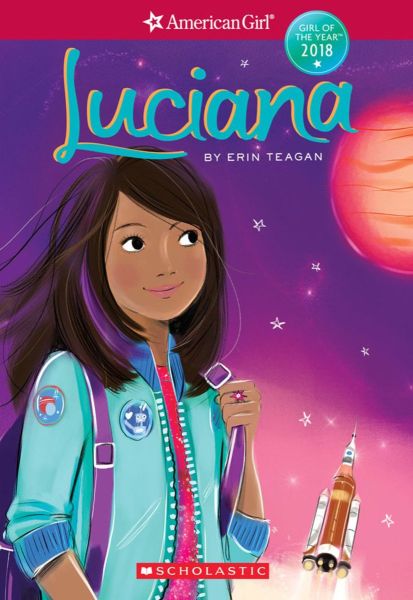
Erin Teagan (www.erinteagan.com) had it all planned out: she’d become a scientist first, then a writer. Combining her passions, Teagan’s debut middle grade novel, The Friendship Experiment (Houghton Mifflin Harcourt 2016) led to her being hired to pen the Luciana books for the American Girl: Girl of the Year 2018 series for Scholastic, Inc. Teagan lives in Pennsylvania with her two little self-described “mad scientists” and her extreme-sports obsessed husband.


PJ McIlvaine: With your first book, how long did it take from idea to first draft to actual publication?


Erin Teagan: The Friendship Experiment was my first ever NaNoWriMo project. That year, I spent most of October thinking about plot, working out challenges I might encounter while I fast-drafted. Going over characters and stories in my head. By the time November 1 rolled around, I was ready to get writing. I finished the first draft that month, but I revised for nearly two years before I found my agent. And then, my agent and I revised for another six months after that! The Friendship Experiment came out in November 2016, almost exactly five years from when I had the first glimmer of an idea.


PM: How easy, or difficult, was it for you to get an agent?


ET: Difficult. Finding an agent was a long road for me. I sent out my first submission to an agent in 2003, and I didn’t sign with an agent until 2013. During those ten years, I kept writing and producing new work and trying new things. I went to conferences and read books and joined a critique group. By the time I found an agent for The Friendship Experiment, I had seven full manuscripts in a drawer and about a million rejection letters.


PM: What do you like best about the writing process? Outlining? Research? Revising?


ET: Basically, I love every part of writing when it’s going well! I was never an outliner until I had to turn in outlines for Luciana, and by the third book, I started to really enjoy the outlining step in the process. It felt like brainstorming, and I loved that freedom. I think that’s why I like fast-drafting as well. When you’re outlining or working on a messy-first draft, anything goes, because you know the real work (revisions!) and the fine-tuning will come later.


For me, though, the worst part is that first time I read the messy-draft all the way through and have to face the reality of revisions. At first it feels paralyzing, like I can’t do it, like this will never grow into a polished manuscript, but as soon as I get my revision momentum going, things start looking up. That’s when I start enjoying the revision part of the process as well.


PM: The American Girl book series about “Luciana, 2018 Girl of the Year” — how did that come about? How many books are planned for the series?

ET: I feel so thankful for the opportunity of writing the Luciana books. It was an amazing experience, and a big surprise. American Girl was looking for an author that wrote for a middle grade audience and brought science into fiction. The Friendship Experiment had just come out and was on the SCBWI’s Winter Reading List, a list that any SCBWI member can volunteer their book for. The editor I worked with spotted my book on the list, read it, and thought my voice and background was a good match for the character and story they were creating. She reached out to my agent, and the rest is history!


PM: Your school presentations, as described on your website — how did you develop those? Do you tie the presentations in with your books/subject matter?


ET: I have a lot of fun developing the programs I offer. As a kid that didn’t connect with science until I was in middle school, I really looked forward to visiting schools and exposing students to a fun and/or weird part of science. All of my programs tie into my books. For example, in The Friendship Experiment, my main character likes to go around swabbing things (cleats in the lost-and-found, floors of the school bus, retainers…) to see what grows on petri dishes. I’ve visited a lot of schools and libraries and swabbed everything from tablets, door handles, trash cans and toilet seats to a favorite classroom book (Diary of a Wimpy Kid) with students. It’s fun and funny to see the results.


PM: Now that you’ve had several books published, do you find the process easier or harder?


ET: I’m not sure that publishing my books has made the process of writing easier, but each time I finish a manuscript, I’ve learned something that I can bring to the next project. And every time my writers group critiques something I’m working on, or an editor sends me notes, I learn even more. Because of this, sometimes I can read something I’ve written and figure out what’s not working. It can still take me two or five or ten revisions to fix it, but at least it’s a step in the right direction!

The post Persistence Pays Off for Middle Grade Author Erin Teagan appeared first on   WriteForKids - Writing Children's Books.

Wednesday, March 7, 2018

Author Brings Neurodiverse Characters to Middle Grade Fiction

This is an excerpt from an interview that appeared in the March 2018 issue of Children’s Book Insider.


by PJ McIlvaine


The path to publication is not always a straight road; sometimes there are twists and curves and unexpected potholes that throw you for a loop. Sally J. Pla (www.sallyjpla.com) took upheavals in stride, turning lemons into lemonade with two published books: the critically regarded The Someday Birds (Harper Collins 2017), and Stanley Probably Will Be Fine (Harper Collins 2018), which garnered a Kirkus starred review and was named a Junior Library Guild Selection of 2018. Her picture book, Ben­ny, The Bad Day, and Me, is coming out from Lee & Low in late 2018. Drawn to neurodiverse characters, Pla (pronounced “Blah” but with a P) has found her niche in the ever-expanding kid lit universe of #ownvoices.


PJ McIlvaine: Your novels both deal with characters in the “neurodiverse world.” What exactly does that term personally mean to you, and why are you drawn to write about those who feel left out or different or who have difficulty fitting in with expected social norms? How much of yourself do you see in your characters?


Sally Pla: I like to use Professor Nick Walker’s definition of “neurodiversity” which you can find on his blog Neurocosmopolitanism.com – it is, quite simply, a term referring to “the diversity of human brains and human minds.” But it implies that there is, or should be, a wide, diverse range of acceptance – that to advocate for neuro­diversity means that one accepts all of the great range of neurocognitive differences that make us human. And that those differences are valid.


There is another term: neurodivergence. This is used to describe those whose brains vary from the norm. Autistic, dyslexic, OCD, Tourette’s, etc. brains are described as neurodivergent.


And yes, I am drawn to neurodivergent kids. I have an autism diagnosis myself, although my symptoms are much milder now than they were when I was a child. I have an autistic son and nephew, and many friends. Every time I visit a school, I ask, “How many of you have a friend or relative or classmate with autism?” and every single hand always goes up. The rates are one in 68 now – higher in some spots. One in 41 eight-year-olds in New Jersey are autistic, according to the CDC. Autistic girls are especially under-diagnosed, I suspect. Autistic girls are missed because their symptoms are so different from boys’. They are more socially aware than the boys, generally speaking.


It’s my mission to populate kid lit with more authentically autistic and generally neurodivergent characters. It’s a bit of a personal goal. There are some good books out there, but not enough of them yet. We need more.


PJ: The cover for Stanley is awesome. It has the look of a graphic/comic book. How much input did you have in the illustrative process?


SP: Stanley is not a graphic novel, but it does have some cool interior art by Steve Wolfhard, not to mention his cover. Steve was a storybook artist on Cartoon Network’s Adventure Time. (When I tell kids that, I get a small cool vibe by association, so I like trying to yoke my name to Steve’s, hah.) My original vision was for this book to be a graphic novel, but along the way in the process, it morphed into something more wordy! I do want to try writing a graphic novel, and a web comic someday, and illustrating it myself. On the bucket list.


PJ: Your third published book will be a picture book. What inspired you to tackle that genre? Do you see yourself going back and forth between genres?


SP: I’d love to do more picture books. Benji, the Bad Day, and Me will pub with Lee & Low in late 2018, with great illustrations by Ken Min. It’s one of their first with an autistic character, and they are taking good care with it. I guess the point of writing for younger kids, for me, is to start early in portraying autism as a matter of course; as a totally normal, accepted thing. An annoying thing sometimes, yeah, sure, but still: part of NORMAL LIFE.


There are many, many picture books out there with autism in their title that point at a particular kid, usually a brother, and laundry list his symptoms, so other kids can “understand”. This is well-intentioned, but it is also, in a way, quite “othering” and pathologizing to kids who are trying desperately to find a place to fit in.


I wanted to write a picture book that unfolded naturally, with the autism just depicted as a normal part of family life. Annoying, sometimes, yeah, but still, normal. Because for kids who deal with it, whether themselves or in a sibling or friend, that’s how it really is.


PJ: From what I can tell, many writers are still confused about what #ownvoices means. I have seen some writers who are under the impression that because they have a disabled or diverse character (even if its a supporting or minor character) that the material qualifies to be categorized as #ownvoices. Can you elaborate on that?


SP: The definition of #ownvoices is that, for instance, you’re an author with Tourette’s writing a character with Tourette’s. You’re an autistic author writing an autistic character, a paraplegic author writing a paraplegic character. You actually have the same condition you’re writing about.


If you have a condition, but your book doesn’t mention it or deal with it in any way, then that’s not technically an #ownvoices book either. It’s really cool, but it doesn’t fit the standard agreed-upon definition.


I hope that clarifies!


For more from Sally J. Pla on writing diverse characters, see the full interview in the March 2018 Children’s Book Insider.


PJ McIlvaine is a published writer/produced screenwriter/kid lit author/blogger/jour­nalist. In a former life she was a great baker of Europe. PJ is a co-host #PBPitch, the premiere Twitter pitch party for picture book writers and illustrators.

The post Author Brings Neurodiverse Characters to Middle Grade Fiction appeared first on   WriteForKids - Writing Children's Books.

Wednesday, January 24, 2018

It’s Time to Celebrate!

Our CBI Insiders are taking the publishing world by storm! Here’s some of what our Children’s Book Insider subscribers are accomplishing (with just a little help from CBI!):


And — this is very cool — we’re starting to see the fruits of our Writing Blueprints, thanks to some authors who are making a big splash after using those new tools to create killer manuscripts. Awesome!


🤗 Insider Jesse Arrington III used Picture Book Blueprint to create The Villains of Splazat, which has just been published. Here’s what Jesse has to say:


What a joy and journey…and I could not have done it without the help of your Blueprint road map to guide me, literally, step by step! Picture Book Blueprint was a god-send for me at a pivotal time when I was struggling to create memorable characters, to develop a great plot, make logic or sense of the enormous vocabulary of words in sentences all ending in “at”.


Then, there were the nights I went to bed with writer’s block, wondering what do I do now or where does the storyline go from here! Then, I would wake up with the obvious solution. “Hey, wait a minute! Why am I struggling so hard? I have Picture Book Blueprint to help me with my next step on what I need to write or where I need to go in this story!” I’m not kidding you when I say that either. By answering a few simple questions embedded in my story, Picture Book Blueprint freed my brain cramps and sent me on my way to whole new chapters!


My book is doing remarkably well and I’m flattered to be nominated for several children’s book awards thanks to many new friends and fans! Much credit goes to you and your Picture Book Blueprint because without it, I do not know whether I would have even finished the book, let alone published it, in both soft and hardcovers and now in Kindle edition.


Wow! This is awesome news, Jesse. And we’re so glad Picture Book Blueprint helped make it happen!

To learn more, visit Jesse’s lovely website: http://www.thevillainsofsplazat.com/


🤗 Insider Katie Hayoz used Chapter Book Blueprint to create a chapter manuscript that was included in the new Undiscovered Voices anthology! Here’s Katie:


I’ve written for teens and adults, but I had wanted to write a chapter book as I was frustrated with my youngest’s lack of interest in reading. Either the books like this were too difficult for her or they were aimed at boys. So…I wrote one of my own. Chapter Book Blueprint gave me the confidence to move forward on my project, knowing I wasn’t just winging it. And, most of all, CBB opened up a world of literature that I hadn’t really explored before.


I’m thrilled to say that my chapter book manuscript was chosen as a finalist in SCBWI’s British Isles/Europe’s Undiscovered Voices competition and included in the anthology!


Way to go, Katie! That’s a great accomplishment. If you want to download the anthology free, go to http://www.undiscoveredvoices.com/?page_id=1762


🤗 Insider Kim Ellis checks in with some great news:


My middle grade fantasy novel, Tangled in Magic, has been published by Handersen Publishing. In the story, Agatha searches for her twin brother, Malcolm, but the evil warlock, Santer, uses magic to prevent them reuniting and reclaiming their inheritance. The book features illustrations by Alison Gagne Hansen.


Thank you CBI!


Awesome, Katie! Head over to https://www.amazon.com/Tangled-Magic-Kim-Ellis/dp/1941429513 to see the book. And check out all those sweet 5 star reviews!


🤗 Insider Beverly Witwer is using not one, but two Writing Blueprints to make her publishing dream a reality:


I have been a CBI Insider for over 3 years and I wanted to tell you my story of using the Picture Book Blueprint. I had been trying to write a children’s picture book for a long time when I bought the Picture Book Blueprint. Once I applied the Picture Book Blueprint to the new plot I was writing, everything came together. My manuscript is now ready to go.


Thankfully, I thought ahead and when the Self-Publishing Blueprint became available, I snatched it up and I am now using it to guide me in self-publishing my manuscript of The Triplet Ballerinas. Thank you for developing the Picture Book Blueprint and helping me to succeed.


Now that’s what an empowered author sounds like. Great job, Beverly!


To get updates on the progress of The Triplet Ballerinas, go to https://www.facebook.com/thetripletballerinas/


We’ll have lots more good news to report soon.   Do you want to get in on the fun of being a successful published author?  Then do what these folks did — become a CBI Insider by subscribing to Children’s Book Insider, the Children’s Writing Monthly!


For just pennies a day, you’ll receive fresh market leads, special “Above the Slushpile” submission codes to top editors and agents, state of the art instruction, community support and much, much more.


Check out our special offer now at http://writeforkids.org/come-join-the-insiders-2/ and join the fun!

And to learn much more about our Writing Blueprints, go to http://WritingBlueprints.com


The post It’s Time to Celebrate! appeared first on   WriteForKids - Writing Children's Books.

Tuesday, January 16, 2018

Amazon Marketing Services Offers Cheap Ads for Self-Publishers

by Lois Wickstrom


For the self-published author, Amazon is the single easiest and least-expensive way to get your book in front of readers. Amazon lists self-published books from many sources, such as IngramSpark, Lulu, CreateSpace, and Kindle Direct Publishing.


But once our books are created, published and up on Amazon, the next question is: How can we get customers to find and buy our books? Most advertising for self-published books costs more than it brings in.


Amazon Marketing services now has an advertising program for Kindle books that links in the paper editions (printed) of those books as well.  You do need to make sure that the Amazon listing for your Kindle book also shows your paperback and/or hardcover versions.  If they don’t, just contact KDP Customer Service, giving them the links to all versions of your title, and they will combine the listings.


My Kindle books were lingering in the 2 millionth most popular on Amazon for Ladybugs for Loretta and 4 millionth most popular for Oliver, A Story About Adoption. This means they were selling one or two copies a month combining all forms of each title, and had been selling that slowly for about a year.
Then I decided to try the Amazon Marketing Services.


This is a program that lets you buy sponsored positions on Amazon’s search pages.  Ladybugs for Loretta is about a girl who finds ladybugs under rocks and behind tree bark.  I want people who are looking for books about ladybugs and books for girls to consider my book.


Amazon Marketing Services is designed to let authors choose their own search terms (you can buy a pre-selected list, but I don’t recommend that.) The AMS site also offers a default price of $0.25 per click, calculated when people click on the link to view your book. I changed that to $0.15.  Sometimes a click only costs me $0.06. (The actual price depends on what other sellers have bid for the selected search terms.) Also, AMS lets you put a daily cap on how much money you will spend.  I capped my costs at $2 per day.  I rarely spend more than $0.20 per day per title.


I selected the key words I wanted and I wrote the short description of each book that will appear beside a small version of the cover, when people search for my key words.  My books now appear on the top pages of an Amazon Search – maybe not the top 10 listings, but in the top 40 listings. That’s a reasonable number for a customer to look through.


Amazon will display my ad when people search for my key words. I only have to pay when somebody clicks on the ad.

When you set up an AMS account, you will be able to see how many times your book ad was displayed and how many times people clicked on each of your key words.
The bottom line here is that my books have gone from selling one or two a month, to selling about 13 a month.  This doesn’t sound like much, but it means that my Ladybug book is now in the 200,000s and Oliver is in the 600,000s. This is a huge jump in rank. I figure the increases can become cumulative.  The higher my books are in rank, the more often people will see them and the more often people see them, the more copies I will sell. And my marketing costs remain less than $10 per month.
The most important aspect of selling on Amazon is the number of reviews your book gets. But you can’t get reviews if you don’t have readers. Amazon Marketing Services is one easy, inexpensive tool you can use to start building readership for your book. It’s not the only tool you should use, but it can help generate some buzz. And once people start talking about your books, you’ve found the best advertising of all.


Lois Wickstrom’s books include:


Ladybugs for Loretta

Bees in Loretta’s Bonnet

Loretta’s Pet Caterpillar

Oliver, A Story About Adoption

Invisible Magic Wand

Hot Chocolate Underpants

Rooster Under the Table

The post Amazon Marketing Services Offers Cheap Ads for Self-Publishers appeared first on   WriteForKids - Writing Children's Books.

It’s OK If Your Readers Cry

If you’ve ever feared that your manuscript is too “real” for children, or if you feel the urge to write about a sanitized reality in order to protect young readers, remember this: kids learn how to navigate the world through their books. And if they are experiencing pain, seeing that pain acknowledged in a story helps them know they are not alone. But you should really hear this from two of the greatest children’s book writers of our time. Matt de la Pena, in his essay “Why We Shouldn’t Shield Children From Darkness” for Time magazine, and Kate DiCamillo’s response, “Why Children’s Books Should Be a Little Sad“, beautifully articulate how a little sadness in a children’s book teaches readers that they can, indeed, bear the burdens life may give them.

The post It’s OK If Your Readers Cry appeared first on   WriteForKids - Writing Children's Books.

Tuesday, January 9, 2018

35 Years a Writer, 35 Lessons Learned

by Jane McBride


(Note:  This article is from the new January 2018 edition of Children’s Book Insider, the Children’s Writing Monthly.  To learn more about this essential tool for all kidlit writers, click here.)


Thirty-five years have passed since my first writing was published. Thirty-five years in the crazy business of writing have taught me a number of things. Thirty-five years have also taught me that I have much still to learn. But today we’ll start with what I’ve learned thus far. My hope is this list will shorten your own learning curve.


1. Writing is a business. Treat it as such.


2. Treat yourself as a business person. If you don’t respect yourself as both a writer and a business person, how can you expect others to treat you that way?


3. Keep records. Keep very, very good records. You never know when you’ll be audited, as my husband and I were five years ago.


4. Keep on top of your taxes. Do you need to make quarterly tax payments? Penalties are no fun.


5. Keep track of your expenses. Do you think that it’s too much trouble to record your mileage to a meeting or postage costs? Think again. Every penny counts.


6. Invest in yourself. If you can swing it, attend writers’ conferences. Subscribe to industry periodicals such as CBI, The Writer, Children’s Bookshelf (twice-weekly newsletter electronic newsletter from Publishers Weekly), etc.


7. Invest in good equipment. You wouldn’t try to cook professionally without the right tools. The same applies to writing.


8. Network. Even if you are an introvert, as many writers are, learn to network. You needn’t become a social butterfly at conferences, but don’t spend all of your time in your room. Engage others in conversation.


9. Have a support group. Writing is a solitary business. One of the best things you can do for yourself and for your career is to find a group of like-minded people. If you belong to a professional organization, see if there is a chapter in your area. If there isn’t, consider starting one. Or join an online group.


10. Find a mentor. A mentor can guide you in your writing, offer critiques, and tell you when you’ve gone off track.


11. Be a mentor. I’m a firm believer in giving back. Mentor a less experienced member of your writers group. Mentor a young writer at your local high school. You’ll learn much in teaching others.


12. Work to first learn and then improve your craft. Do you expect a surgeon to decide he wants to practice medicine and then start operating the next day? Of course not. You want a surgeon to have the necessary training and skills before he performs an operation. Then why do we expect to be skilled writers without learning how to write? Take classes. Attend workshops and conferences. Above all, practice your craft and write.


13. Don’t take the first offer that comes your way. In our eagerness to sell a book, especially a first book, it’s tempting to take the first offer, even a bad one.


14. Be wary of scams that pop up in the industry such as book doctors and others who claim they can fast-track your career. Some are legitimate; some are not. Always do your research before paying anyone to edit your manuscript or help you self-publish.


15. Remember that no agent is better than a bad agent. Don’t be in such a hurry to sign with an agent. Do your due diligence and check out any agent or agency before you sign.


16. Understand that a contract with an agent does not mean you are married to him or her, but that you will be “bound together” for the lifetime of any book he or she sells for you.


17. Don’t burn your bridges. Leave any agency or publishing house with good feelings on both sides. Any bad-mouthing about editors or agents on your part can and probably will come back to bite you.


18. Keep in touch. When an editor leaves your publishing house, it pays to stay in touch. The same goes for agents and other industry professionals.


19. Volunteer. Volunteer at your writers’ chapter, at conferences. Volunteer at bookfairs and the library. You will not only be giving back, you will also be making valuable contacts.


20. Establish working hours. When you’re writing, you’re working. Let your family and friends know that.


21. Don’t be afraid to say no. A few years ago, I received an offer to buy a book from a new publishing company. Something felt fishy about the offer, and I turned it down. In the end, I’m glad I did. The company proved not to be reputable.


22. Don’t be afraid to say no to family and friends. This goes back to treating yourself as a professional and expecting others to do the same. It’s tempting for others, when they learn that you work from home, to say, “Since you’re not working, will you ‘Let the repairman in,’ ‘Watch my sick child,’ Bake seven dozen cupcakes for the school bake sale,’ etc.” Smile politely and say, “I’m sorry, but I am working.”


23. Give yourself a break now and then. It’s wonderful to write every day (or whatever your schedule is), but it’s okay to take a break once in a while. You need to experience life to write about it.


24. Don’t beat yourself up when you can’t make your word count. Double down the next day. The important thing is that you keep writing.


25. Treat rejection as part of the learning curve. Rejections are a way of life for many writers, including me. After selling 36 books and hundreds of stories and articles, I still receive rejections with depressing frequency.


26. Respect your editor and/or agent. Don’t pester them with constant calls, texts, or emails. It’s okay to stay in contact, just don’t overwhelm them.


27. Meet your deadlines. Publishing houses operate on strict deadlines. If you don’t meet yours, you may put a crimp in the entire schedule.


28. If you can’t meet a deadline, let your editor know as soon as possible. Editors realize that emergencies happen. Give yours a heads-up if it becomes apparent that you can’t meet a deadline.


29. Be prepared to have financial dry spells. What happens if your last book doesn’t sell well? Can you still make the mortgage and buy groceries? (See # 30.)


30. Think twice before quitting your day job. Royalties can be delayed and/or be spotty. It helps to have the cushion of a regular paycheck to fall back on.


31. Know how many books you can reasonably expect to produce in a year. Set a realistic goal and then do your best to meet it.


32. Don’t be so quick to send off a book. Revise and polish, revise and polish again.


33. Stay current. Know what’s happening in your genre. Keep up with the latest trends. You don’t have to write to them, but you should know what is going on.


34. Find an outlet outside of writing. Writing is not just a business, but a form of expression as well. It helps to have another outlet to replenish your well of creativity.


35. Keep learning. A woman in my writing chapter expressed surprise when I mentioned that I had just returned from a writers’ conference. “With all the books you’ve published, I’m amazed that you that you still attend conferences,” she said. I replied, “I hope I never feel that I don’t need to learn something.”


Well, there you have it—35 lessons learned, many of them the hard way!


Jane McBride is the author of 36 novels, numerous short stories and articles including pieces in 16 Chicken Soup for the Soul anthologies . Follow her writing blog at http://ift.tt/2EqH3z5


Wednesday, December 13, 2017

The Writing Blueprints Holiday Flash Sale is ON!


You do not know how long I have been waiting for something like this. With my new Writing Blueprint I am confident that I will be able to finish my book.


I am literally in tears and can nearly see the keyboard. Thanks and love to you all.


Mark S.


It’s that time! 


Our 4 Day Holiday 2017 Flash Sale is now officially on. For the next four days, you’ll save 25% on EVERYTHING on the Writing Blueprints site.


ALL our Blueprints are on sale, including:


  • Picture Book Blueprint
  • Picture Book/Easy Reader Bundle and Easy Reader Upgrade
  • Chapter Book Blueprint
  • Middle Grade / Young Adult Blueprint
  • Self-Publishing Blueprint


Plus, you’ll save 25% on all our specialty tools, including:


  • Picture eBook Mastery
  • Book Marketing Power Bundle
  • School Visits Made Easy
  • Dialogue Made Easy
  • Time Management and Goal Setting for Writers


….and more!


Here’s how to get in on the fun:


1. Go to http://ift.tt/2zatDaV to see everything that’s available.


2. When you’ve chosen an item, get the 25% discount by using this coupon code on the checkout page (just click where it says “Add Coupon”):


2017


Not too creative a coupon code, but easy to remember, right? 🙂


And yes — you can use this coupon multiple times for as many items as you like.


(Not sure what a Writing Blueprint is? Head over to http://ift.tt/2ajYBD1and watch our fun video that explains it all. You’ll be blown away by this radical new innovation that makes writing a great book downright easy!)


Want to Buy Writing Blueprints as a Gift?


Now you can give our full Writing Blueprints (Picture Book, Chapter Book, YA/Middle Grade or Self-Publishing) as as a gift.


If you want to buy a killer gift for someone, go to the page listed above (http://ift.tt/2zatDaV) and scroll to the bottom. You’ll see “Give Any Blueprint as a Gift”. Click that and follow the instructions.


And yes, you CAN use your promo code when purchasing a gift, so you’ll save big on that too! 


One more time, here’s the link for all the products included in the Flash Sale:


http://ift.tt/2zatDaV


And here’s your 25% Off Coupon Code:


2017


Happy shopping!


The post The Writing Blueprints Holiday Flash Sale is ON! appeared first on   WriteForKids - Writing Children's Books.

Monday, November 27, 2017

Understanding the “New Adult Fiction” Category

by Jane Choate


What is new adult fiction?


New adult fiction bridges the gap between young adult and adult books. It typically features protagonists between the ages of 18 and 26. The label was first used in 2009 when St. Martin’s Press hosted a contest looking for stories that could be marketed to both young adult and adult readers. The contest described for new adult fiction as books “with protagonists who are slightly older than YA and can appeal to an adult audience.” Put simply, new adult is the age category after YA.


New adult fiction books concentrate on issues such as leaving home, developing sexuality, suffering with chemical depression, coming of age (both legally and emotionally), and wading through a myriad of choices in education and career. The genre has gained popularity rapidly over the last few years, particularly through books by self-published and bestselling authors like Jamie McGuire, Colleen Hoover, Darlene Gardner, Megan Abbott, and Cora Carmack The term has now become widely accepted with most traditional publishers now publishing new adult books and Goodreads, Amazon and Kobo adding it as an official cateory. Entangled Publishing has developed its own NA imprint, Embrace, while Random House had also launched an NA imprint, the digital-only Flirt. Other publishers are marketing the books under their adult or YA imprints.


The chief features that distinguish this category from YA fiction are the perspective of the main character and the scope of his/her life experiences. Parents with kids of this age know that there is a vast difference between a new high school graduate who is barely 18 and a home-for-the-summer 19-year-old who has just returned from two semesters of college.


This difference has less to do with chronological age and more to do with the greater feelings of independence and selfreliance. At the same time, these characters are struggling to find their own place in the world. They question the attitudes and values with which they were raised and are finding out for themselves what they believe, not just what their parents told them to believe.


New adult fiction works to capture the perspective gained as the cares and concerns of childhood fade and life experience is gained, which brings (we hope) greater insight and widom. Characters of this age are building their own lives. They may be living away from home for the first time and handling such problems as dealing with supporting themselves financially, balancing checkbooks, finding themselves overdrawn on their credit cards, and other life experiences.


Another major difference between young adult and new adult fiction is that of content in terms of sexually explicit language, and more mature situations such as suicide, alcoholism, and drug abuse. Though some YA books have dealt with these issues in the past, NA books take a different viewpoint with the characters facing and owning up to poor decisions and their long-term consequences.


Not every NA book will have such content, but many do and make no apologies for it. Other potentially controversial subjects include date rape and sexual assault.


Lighter topics are also addressed such as looking for a first apartment, dealing with roommates, and even finding the perfect wedding planner. No subject is offlimits, whether it be light and whimsical or darker and more serious. Like any fiction, the new adult genre can have crossovers, combining with science fiction, fantasy, romance, historical, mystery, or suspense.


If you have a manuscript featuring an 18 – 26 year old main character who is struggling to find his own identity and growing in self-awareness, consider the new adult market. Editors and agents alike, not to mention readers, are actively seeking new authors who can engage them and speak their language.

The post Understanding the “New Adult Fiction” Category appeared first on   WriteForKids - Writing Children's Books.

Thursday, November 16, 2017

Writing for Children & Teens: Simple Steps to Understand Your Readers

by Jane Choate


In various writers’ groups over the years, I have heard a number of writers who say, usually with a certain degree of self-righteousness, “I don’t write for others.  I write for myself.”  That’s great.  For the rest of us, though, those who have struggled to get published and who are struggling to stay published, it doesn’t work.  We write for ourselves, yes, but we write for others as well.  We want our words to have an audience.  Just as a painter or a sculptor wants his works to be viewed and composers want their music to be heard, writers want their work to be read.  For it is in the reading that the work comes alive.


But anyone who writes for children and teens must ultimately answer a key question — just who is that audience?  Are we writing picture books?  In that case, the audience is the toddler and pre-school set; it is also the parents of those children as they are likely the ones to be reading the books to their children.  Are we writing for early readers?  For the ‘tween set?  For young adults?  Knowing your audience is key.  Knowing their tastes, their needs, their wants, their expectations is vital in penning the kind of stories that will touch their hearts and minds.


If you aren’t certain who your audience is, try one or more of the following steps:


STEP 1:  Know yourself.  If you don’t know yourself, how are you going to know your audience?  Know your comfort zone.  Know what makes you uncomfortable.  If you aren’t comfortable with angst-filled stories, you may want to steer clear of writing coming-of-age books.  Know your likes and dislikes.  Know your emotional and spiritual self.  If faith is important to you, you may find that you want to write for the growing Christian market. 


ACTION:  Ask yourself some questions.  Do you enjoy being around babies and toddlers and early grade-schoolers, but older children and teens send you running in the opposite direction?  If so, don’t be afraid to admit it.  Own that and embrace the fact that you are probably most comfortable writing for the preschool and early reader set.  Likewise, if you enjoy the humor and sometimes angst of older children, such as ‘tweens and young teenagers, you will want to focus your efforts there.  Or maybe you want to create stories for the YA market, to touch the lives of those teens who are on the cusp of adulthood.


STEP 2:  Familiarize yourself with what’s being written now for the age group for which you are aiming your work.  It’s wonderful to read the classics such as Laura Ingalls Wilder’s Little House series, Mark Twain’s Tom Sawyer, and Louisa May Alcott’s Little Women etc.,  but it’s imperative that you know what publishers are printing now


ACTION:  Read.  Read widely in your targeted age group.   Go to your library—a librarian can be a writer’s best friend—and ask for a recommended reading list.  If you have children or grandchildren in this age group, you have a leg up, as you are already familiar with what kids are reading.  Read books in other age groups as well.  You want to know the differences between a board book and a book penned for the almost-reader and to understand what sets a middle grade book apart from one written for the ‘tween age group.  Pay attention to vocabulary.  Books for very little children repeat words over and over.   For older children, the vocabulary is more varied.  Read pages aloud and listen to the rhythm.  This is particularly important in writing for small children who love repetition, not just of words but of sounds and sentence structure.


ACTION:  Subscribe to industry periodicals such as Children’s Book Insider.  Treat yourself to a current copy of Writer’s Market.  Learn what publishers are looking for in the varied children’s and teen markets.  Learn what agents are representing the kind of books you want to write and what their targeted audience is.


ACTION:  Go to places where you can find your audience and hang out with them.  For example, picture book writers can volunteer in a preschool or kindergarten.  Teachers LOVE volunteers.  Don’t be afraid to pick the brain of a teacher.  Teachers know what kids like to read and what they avoid like the plague.  If you’re writing stories for the middle-grade group, go to a third or fourth grade classroom.   If you belong to a church, offer to teach Sunday School.  If you don’t have children or grandchildren of your own, volunteer to tend the children of a busy young mother.  Not only will you learn more about children, you’ll be doing a tremendous service for a woman who works harder than any brick-layer! 


Young adult writers need to be online where teens are hanging out (teen book bloggers are a good place to start).  Watch current TV shows for different age groups, especially MG (middle grade) and YA.   Pay attention to the commercials that are sponsoring the shows.  You can learn a great deal from what products are being advertised and how they are marketed.  Go to movies.  Find out who the current super heroes are and who the heartthrobs are.


For picking up on teen language and behavior, there’s no better place than a mall where kids roam the stores in packs.  Settle in at a food court and listen.  Be prepared to take notes, but don’t spend all your time scribbling in a notebook.  Absorb the nuances of interaction between the teens.   Identify the leader and the followers and watch the “pecking order” in action.   Note what the kids are wearing.  Fashion is a spot-on commentator.  Each generation has its own style.  The ripped jeans and cold shoulder tops of today are the poodle skirt and twin set of the ‘50s   


STEP 3: Fit in.  No, I’m not suggesting you try to join a clique of middle-schoolers.  (As if they’d let you in!)   Once you’ve established your audience, learn what is appropriate for the different age groups.  You wouldn’t pen a gritty story of a child watching his parents’ marriage dissolve into a bitter divorce for a picture book, but you might write such a story for a ‘tween audience.  What is right for a YA novel won’t be right for a middle grade one.  Note:  I’m not saying that you can’t tackle tough subjects for younger children, only that your tone, vocabulary, and other aspects will be entirely different than they would be for an older audience.  


ACTION:  Read again.  Read this time with an eye and ear to the subtleties in language and style and tone and subject matter in books for various age groups.  At what age can you talk about sexual activity and LGBT issues?  What about cutting and other forms of self-mutilation and eating disorders?  When is it okay to use curse words?  Or is it ever okay? (This goes back to knowing yourself and what you’re comfortable with.  For myself, I couldn’t use offensive language in writing for children of any age.)


Learning to know your audience is like any other writing skill, such as crafting characters, strengthening conflict, and writing sparkling dialogue  You become better with practice.  The best way to do that is to write and to keep writing. 


The post Writing for Children & Teens: Simple Steps to Understand Your Readers appeared first on   WriteForKids - Writing Children's Books.

Wednesday, October 25, 2017

Here’s an Extraordinary Submissions Opportunity

“With Children’s Book Insider on my side, I went from being unpublished straight to the bestseller list! If you dream of writing for children or teens, CBI is the place for you.” Ken Derby, author, The Top 10 Ways to Ruin the First Day of School


If you want to become a successful children’s author and you’re not currently subscribing to Children’s Book Insider, the Children’s Writing Monthly, you’re making your life much harder than need be.


To help set things right, we have three big reasons to become an Insider now:


* A once-in-a-lifetime submissions opportunity with a publishing powerhouse


* The chance to get your questions answered on a regular basis by one of children’s writing’s most renowned experts — free.


* A big, big discount.


First, the incredible publishing opportunity:


Throughout the year we offer Insiders exclusive Above the Slushpile™ submissions codes. These are secret codes that, when included with your submission to top editors and agents, allow you to jump over the slushpile and get immediate attention. And sometimes, we even get a code that will get your submission read at houses that aren’t even accepting unsolicited submissions!


The November issue of CBI features one such code. A two month window to submit your work directly to an editor at…..


Wow. Just so you understand — Simon & Schuster Books for Young Readers is closed to unsolicited submissions. This is the only way to submit if you don’t have an agent.


And only if you’re a CBI Insider. (Keep reading to find out how to become one — at a big discount — before November and get this Above the Slushpile™ code!)


Now, the free help from an expert….


We just had one of our regular “Ask Laura Anything” sessions for Insiders. Laura spent almost two hours answering every question our Insiders had.


Imagine if you had the regular opportunity to — at no additional cost — have one of children’s writing’s most renowned and respected experts answer your questions?


Once you’re an Insider you won’t have to imagine any more. You’ll be invited to attend these regular Ask Laura Anything sessions. It’s included in your membership!


To show you just how great these sessions are, we’d like to gift you the entire session from this week! It’s packed with insight and advice and, by itself, is worth far more than the pittance it costs to become an Insider.


Here’s the link — watch and enjoy!


http://ift.tt/2gJ255K


And the BIG DISCOUNT…..


The regular price to become an Insider is just $49.95 for the full year. That includes:


* 12 downloadable issues of Children’s Book Insider, the Children’s Writing Monthly, packed with market news about publishers, agents and contents, in-depth instruction, interviews with top editors and agents, and much, much more.


* Above the Slushpile™ submission opportunities that give your submissions priority status at top publishers and agents.


* The Children’s Writing Knowledge Base, our giant searchable library filled with answers to all your writing questions.


* Our private Facebook groups for support and community.


* Seven years of back issues!


* Regular “Ask Laura Anything” sessions.


* b, including complete courses, ebooks, webinars and more, all waiting for you as soon as you join.


Yep, $49.95 is really cheap for that kind of value. But you know what’s even cheaper?


$39.95


That’s right — for a very limited time you can become an Insider for just $39.95 and get everything (including the upcoming November issue with the Simon & Schuster Above the Slushpile™ code)


So let’s do this — it’s the perfect time to get your career in gear and start earning the success you deserve.


We leave you with the words of a longtime subscriber:


“I can’t imagine not subscribing to CBI and taking myself seriously as a children’s writer”


Amen to that! Come join us now at


http://bit.ly/cbi-megadiscount


We can’t wait to welcome you to the Insiders!


The post Here’s an Extraordinary Submissions Opportunity appeared first on   WriteForKids - Writing Children's Books.

Thursday, October 19, 2017

Writing Groups 101 – Which Kind is Right For You?

by JEN Garrett


When writers think of joining a group, they often think of joining a critique group. But this is only one type of writers’ group. Other reasons writers may join a group include accountability, networking, and brainstorming. All of these aspects are important to your writing journey, and can be a boon to your critique group. But not all writing groups focus on critiquing, even if they call themselves “critique groups”.


Critique Group


Most writers have an emotional cycle in their writing. We write because we are passionate about something and have a message to share. Then we try to get what is in our head on the paper and it sucks. We begin to doubt our ability, doubt that we have talent, doubt that we ever had inspiration in the first place. At this point, the smart writers walk away. But not forever. When we come back, the manuscript still sucks. But there’s something there that doesn’t suck. And now that we are looking at it with fresh eyes, we can detect the parts that don’t suck. We try to fix it as best we can on our own, but we’re still too close to the story. We need someone else. Maybe several someones. That’s where critique groups come in.


A critique group’s main focus is to give and receive feedback on manuscripts. Good critique groups help the writer revise their manuscript by pointing out its strengths and weaknesses in a kind and polite way. Writer continues to grow and hone their craft in the process. Good critique groups have stated goals and rules for exchanging manuscripts. These are established as soon as the group is formed, and revisited periodically to maintain order. When you have no manuscripts to critique, you may find you need a different type of writing group to continue on your writing journey.


Cheerleading Groups


Let’s say you have one published book or series, and now find yourself at the height of your writing career, with no desire to produce any more manuscripts. You probably don’t need a critique group anymore. What you might want instead is a writer’s group that will congratulate you and help you find more followers. You might need a “Street Team” to rave about your book, attend your book signings, and tweet about your success.


If you are pre-published, you may need extra encouragement to submit your polished manuscripts. Bringing them to your critique group, or to any group for that matter, would be a waste of time. But joining a writing group that cheers you on without reading your work can give you the confidence you need to keep going. These cheerleading groups are more likely to be found on social media than in person.


Write-Ins and Accountability Groups


Critique groups are great when you are revising a manuscript, but not so helpful when you simply need the motivation to keep your butt in chair and hands on keyboard (or pencil on paper, etc.). For these type of encouragement, I suggest instead looking for a “Write-In”.


Write-Ins are groups that meet together to, well, write! These groups can be in person or online, and usually include a specific amount of time for silent sustained writing. On Twitter, for example, you can join writing sprints under the hashtag #writingsprint. Simply tweet how long your sprint will be, or reply to another writer. After the sprint, tweet out your word count or mention something that surprised you. Other write-In groups might meet at a local cafe to socialize and encourage each other.


Similar to write-in groups are accountability groups. These groups tend to be more long-term than the write-ins, with each member keeping a running word count over a few days or weeks. NaNoWriMo.org, for instance, challenges writers to write 50 thousand words in 30 days. Some accountability groups meet via social media while others send running totals through email or direct messaging.


Brainstorming


Brainstorming is an important step in the writing process. From the initial spark to each revision pass, brainstorming can take a mediocre manuscript to a level of brilliance. However, a good critique group can separate brainstorming sessions from critique sessions.


As an incorrigible brainstormer, I sometimes fall into this trap when I critique. Instead of focusing on helping other writers find their own voice, I sometimes offer rewrite ideas disguised as “solutions”.


For example, if the manuscript says, “The scientist was sad because he failed.”

A good critiquer might comment, “How could the scientist’s feelings about failure be revealed instead of explained? Can you show us how he failed?”


But a brainstormer might say, “How about the scientist throws the beaker across the room? And couldn’t the scientist be a girl?”


The “solutions” offered by the brainstormer imply dangerous behavior that the original author may never have intended. And at this point the gender of the character is irrelevant to the problem. On the other hand, the critiquer is offering direction through questions that allow the author to find their own solutions.


My awesome critique group politely redirects me when I start sliding into brainstorming mode, and because of that I’ve learned to focus on critiquing. If, however, your writers’ group doesn’t seem to recognize the difference, then it’s probably actually a brainstorming group rather than a critique group.


Social Club


While it’s important to get to know the other members of your group, good critique groups don’t spend entire critique sessions socializing. There are, however, organizations that often do have regional social events. SCBWI, for example, have local events with such titles as “Mix and Mingle”, “KidLit Mingle”, and “Coffee and Chat”. Other socializing writers groups in your area might be found on Meetup. Like most professionals, writers need other writers who can empathize. Social events can provide imaginary water coolers where writers swap experiences and build camaraderie.


Writers can also find these kinds of writers’ social clubs online. Social media has the word ‘social’ in it for a reason. For example, when your polished manuscript keeps getting rejected and your thick skin is looking a little scarred, you may need to know that your experience is not unique. And trust me, it’s not. Reaching out in a tweet, posting a meme through Instagram, or posting about it in Facebook will elicit sympathetic likes and replies from your online network. Some websites, such as Goodreads, also have social forums where you can connect with other understanding writers.


The word of caution here is to always be professional and polite in these social situations. Make sure your interactions are mostly positive, and are never adversely directed toward any specific person. Receiving a form rejection is a normal part of the writing journey. And, yes, it hurts. But that’s never a good reason to insult the agent or agency that rejected your work.


Why Choose Just One?


Many writers need more than one type of writing group depending on their writing journey. It’s essential to prioritize your needs and decide which groups will best fill those needs. Also, consider your schedule and writing strengths. For example, I belong to several writers’ groups, but only have one that meets regularly in-person. I have found that my other writing needs are better met by online groups and the occasional in-person event.


Check all that Apply


Critique: I need a group of writers that will help me revise and polish my manuscripts

Cheerleading: I need a group of friends who can encourage me to meet my goals without knowing all the specifics of my writing journey.

Accountability: I need a group to whom I can report my writing progress.

Brainstorming: I need a group to help me come up with new ideas or to help me develop my manuscript.

Social: I need other writers with whom I can celebrate and commensurate the ups and downs of my writing journey.


JEN Garrett writes for, about and around children all day. But sometimes she finds time to do the dishes at her home in Northern California. She also finds time to be the SCBWI Critique Carousel Coordinator for her region, query agents, and read mountains of books. How? We don’t know. You can find more about her at http://ift.tt/2yyCFfN

The post Writing Groups 101 – Which Kind is Right For You? appeared first on   WriteForKids - Writing Children's Books.

Tuesday, October 17, 2017

Let’s Celebrate these CBI Insiders!

Our CBI Insiders are taking the publishing world by storm!  Here’s some of what our Children’s Book Insider subscribers are accomplishing (with just a little help from CBI!):


🤗 Longtime Insider Dandi Daley Mackall is an unstoppable force of nature!  Here’s what she’s published so far this year:


Rock Away Granny (Sky Pony)

Wow! (Tyndale House)

Larger Than Life Lara (Tynedale)

Just Sayin’ (Tynedale)

One Small Donkey (HarperCollins)


Learn more at dandibooks.com


🤗 Insider Catherine DePino has been busy too!  Here are her latest releases:


Helping Kids Live Mindfully: A Grab Bag of Classroom Activities for Middle School Students (Rowman and Littlefield)

Elliot K. Carnucci is a Big, Fat Loser: A Book About Bullying (Rogue Phoenix Press)

A Place of Learning: A Teacher’s Story (Rogue Phoenix Press)


Learn more at catherinedepino.com


🤗 Insider Donna Driver has some great news:


“My new middle grade novel about bullying and autism, No One Needed to Know, has won the Children’s Literary Classics Seal of Approval, Honorable Mention in the 2017 Purple Dragonfly Children’s Book Awards, and now is a finalist in the Children’s Literary Classics Book Awards.”


Learn more at dgdriver.com


🤗 Insider Janet Smart has a wonderful new credit:


Her middle grade historical fiction book Duck and Cover has published by Saguaro Books.  It takes place during the tension-filled days of the Cuban Missile Crisis.


Learn more at janetsmart.blogspot.com


🤗 Insider Sonja Anderson has cool news to report:


“My middle-grade novel, Sophie Topfeather, Superstar! (Sunpenny Publishing), was named a finalist in this year’s Cascade Writing Contest!  Also, my book Mount Rainier’s Historic Inns and Lodges was released by Arcadia Publishing.” 


Learn more at sonjaandersonbooks.com


🤗 Insider Linda Whalen is now a published author!


“I’m so excited, after several years my debut picture book Little Red Rolls Away was released by Sleeping Bear Press.  I was able to acquire an endorsement from Joey Travolta! Not only is he a Hollywood director, producer, actor, etc. he works with special needs children to help them be all they can be through Inclusion Films of which he is founder and creative director. I got it in time for it to be printed on the jacket. YAY!”


Learn more at lindawhalenauthor.com


We’ll have lots more good news to report soon.   Do you want to get in on the fun of being a successful published author?  Then do what these folks did — become a CBI Insider by subscribing to Children’s Book Insider, the Children’s Writing Monthly!


For just pennies a day, you’ll receive fresh market leads, special “Above the Slushpile” submission codes to top editors and agents, state of the art instruction, community support and much, much more.


Check out our special offer now at http://ift.tt/1qF7aDW and join the fun!


The post Let’s Celebrate these CBI Insiders! appeared first on   WriteForKids - Writing Children's Books.

Thursday, October 12, 2017

A 12 Step Program for Rejected Writers

Every month, we’ll share a free article that recently appeared in the pages of Children’s Book Insider, the Children’s Writing Monthly. To learn more about the magazine and get a special offer, go to http://ift.tt/2wG9fNN/


This month, we present a fantastic piece by Jane McBride that will give you the tools to not only overcome rejection, but thrive as a result of it.  It’s extremely empowering, and we’re sure you’ll love it.


This article originally appeared in the October, 2017 edition of Children’s Book Insider.


by Jane McBride 


Having had a family member go through the 12 step program originated in AA, I have always had the highest esteem for this inspired program and have witnessed the miracles it can work.


With many rejections under my belt, including one scathing one where an editor suggested I find a different career path, I have looked for ways to deal with the sometimes crippling effects of rejection. I came up with my own 12 step program for writers who are dealing with their work having been rejected by agents or editors:


1. Admit to ourselves we do not have control over rejection.
2. Come to believe that we can take back some control by working to improve our writing.
3. Make a decision to do the work necessary to improve.
4. Make a searching inventory of our strengths and weaknesses in writing.
5. Admit to ourselves the exact nature of where we went wrong in a particular project.
6. Are ready to work to improve our writing in any way we can.
7. Humbly accept that our writing needs improvement.
8. Make a list of all the ways we could improve.
9. Make plans to address our weaknesses, as in taking a workshop, attending a conference, seeking out a critique partner, etc.
10. Continue to take inventory of our strengths and weaknesses in writing.
11. Seek to improve our writing skill by continuing to write, take classes, and other means.
12. Try to help other writers whenever we can.


Let’s take these steps one at a time and see how we can apply them to dealing with rejections.


Step 1: Admit to ourselves that we do not have control over rejection. I own up to the fact that I am a bit of a control freak. I want to know that if I do A, then B will happen. In the case of my writing, I want to know that if I write the best book of which I am capable (A), the book will sell (B). The fact is, these two do not always go together. I’ve sold thirty-six books over the course of my writing career of, coincidentally, thirty-six years. However, I have written many more books than thirty-six, books which did not sell. No matter how hard I tried to make these books as good as possible, they failed to sell. Much of that was my fault in that I didn’t possess the talent or skill early in my career to write a publishable book. Some of the reasons the books didn’t sell were changing market condition and change of editors. Though I do have control over developing my talent and skill, I didn’t possess those at that time.


Step 2. Come to believe that we can take back some control by working to improve our writing. As stated above, I didn’t possess the skill to write salable books at the beginning of my writing, but I knew that I could learn.


Step 3. Make a decision to do the work necessary to improve. I resolved that I would develop my story- telling and writing talents. This took years, but I persevered. Though I have given up on other self-improvement goals, I knew I could not give up on this one. Writing was and is too important.


Step 4. Make a searching inventory of our strengths and weaknesses in writing. I have been told by editors and readers that I have a talent for writing dialogue and developing characters. Similarly, I have been told, mostly in rejection letters, that I lack plotting talents. (Even after all these years, I still lack these, but I’m getting better.) I determined that I would showcase my strengths, i.e. dialogue and characterization, and learn to make my plotting better.


Step 5. Admit to ourselves the exact nature of where we went wrong on a particular project. In one very ambitious project, a 100,000 word suspense novel, I finally had to admit that I had not thought the story all the way through and that the plot inconsistencies were too many to overcome. In addition, I was trying to balance too many points-of-view.


Step 6. Are ready to improve our writing in every way we can. I joke with writer friends that what I lack in talent, I make up for in sheer stubbornness. I refused to give up writing, even when the rejections came so quickly that I could hardly keep them straight. I have watched friends who were talented drop out of writing, unable to keep up the commitment and dedication necessary to succeed.


Step 7. Humbly accept that our writing needs improvement. This is a hard one. Admitting and accepting that our writing is not perfect requires maturity and humility. The editor whom I referenced at the beginning of this article was right to reject the book I submitted to her. (I still think she could have done it more kindly, but she was right: the book was terrible.) Accepting that took me a long time, a period where I sulked and pouted instead of working on improving my writing.


Step 8. Make a list of all the ways we could improve. I mentioned my difficulties in plotting. I continually struggle to strengthen my plotting techniques. I also have a problem of using the same word over and over again. I have a list of my “pet” words, words I try to avoid using very often, and yet they still find their way into my writing.


Step 9. Make plans to address our weakness by taking a workshop, attending writers’ conferences, seeking a critique partner, etc. Over the years I have attended many workshops and conferences. I belong to a writers’ group where I am fortunate enough to have a wonderful critique partner. In short, I am doing every thing I can to make my writing better.


Step 10. Continue to take inventory of our strengths and weaknesses in writing. Improvement is not a destination. It is a continuing journey. Understand that if you want to succeed, you must always be striving.


Step 11. Seek to improve our writing skill by writing, taking classes, and others. One long-time writer friend once asked me why I continued to attend workshops and conferences when I was already multi-published. I replied that I hoped I would never stop learning or wanting to learn. When we do that, we stagnate and our writing reflects it.


Step 12. Try to help others whenever we can. Most writers are incredibly generous with their talents. I have had many successful writers offer encouragement and help to me along the way. In turn I try to pass this along by helping others, mentoring a young writer in middle school, appearing at school classes which are studying writing, critiquing those who ask for feedback. In helping others, I am not only passing along the good which was done for me but also strengthening my own skills by teaching and mentoring.


Whatever level you are at in your writing career at the moment, I hope you will find at least a few of these steps helpful. For real writers, writing is not just what we do, it is who we are. We need to arm ourselves for the inevitable rejections and hardships that a career in writing entails.

The post A 12 Step Program for Rejected Writers appeared first on   WriteForKids - Writing Children's Books.